The Relocation Weight Trap

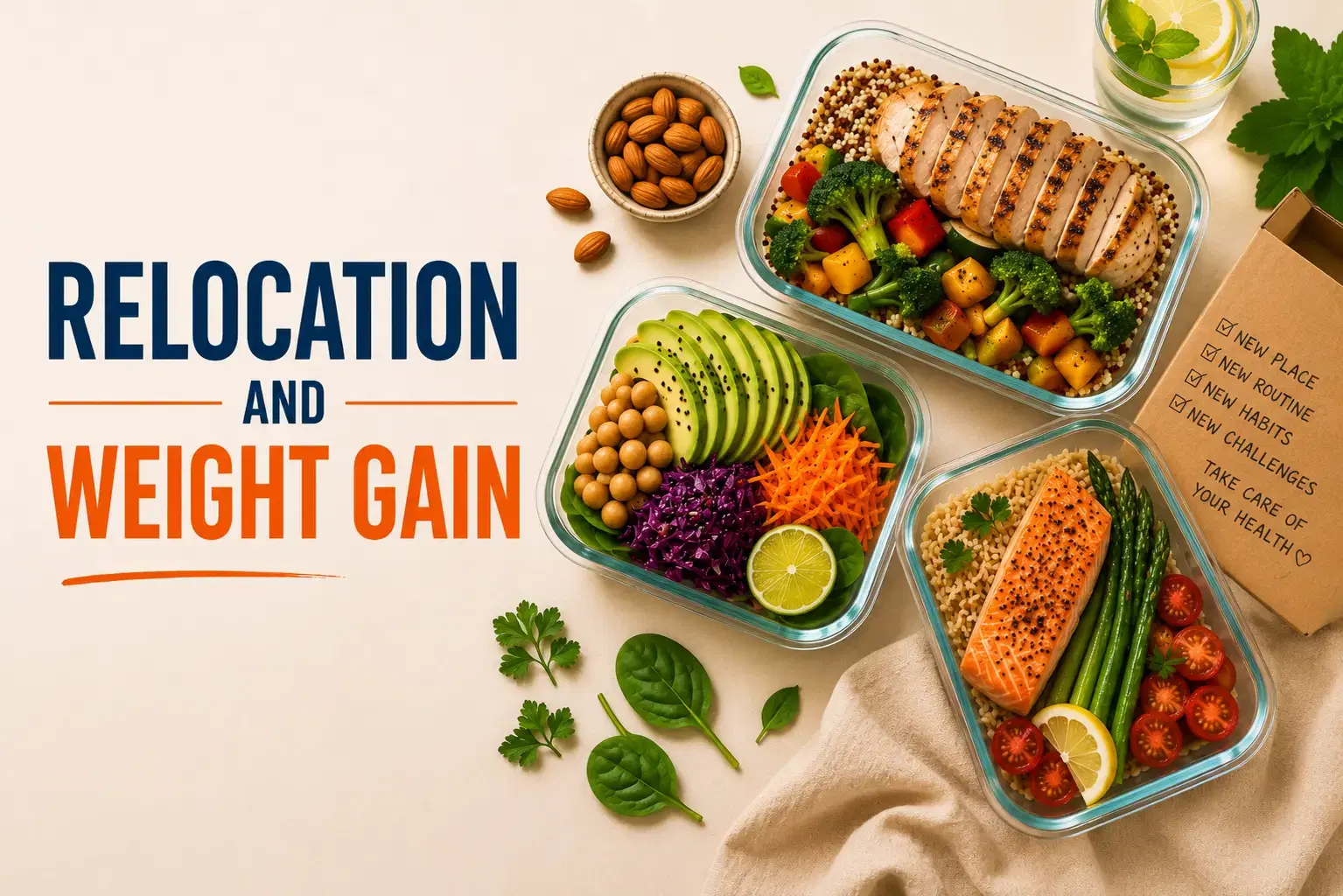
Unexplained weight gain in Dubai after relocating is one of the most common things people mention in their first year here. This article explains why it happens, not because of bad choices, but because relocation removes the invisible habitual structure that was managing food decisions at home, and what rebuilding that structure actually looks like in a new city.
Most people who gain weight after moving to Dubai didn't change what they eat. They changed where they live. The distinction matters more than it sounds.
The person who arrives here eating roughly what they always ate, not dramatically changing their habits, and still puts on 7 or 8kg in the first year isn't making worse choices than they were at home. They're making the same choices, just without the invisible architecture that was quietly managing those choices back home. The weight gain follows the structure loss. Not the intention change.
Most of Your Food Decisions Back Home Were Never Really Decisions
Think about what a typical weekday actually looked like before the move. The walk to the station. The salad place two floors below the office you'd been ordering from for over a year. The flatmate who cooked on certain nights. The gym that sat inconveniently between your commute stop and home, making it easier to go than explain why you didn't. None of this felt like a weight management strategy. It wasn't one. It was just the conditions of living in that city, and they were doing significant work without you asking them to.
Research on habit and everyday behaviour found that a substantial share of daily decisions, including food decisions, are not conscious choices at all. They're responses to environmental cues. The same context, the same time of day, the same location, triggers the same behaviour automatically. The person who 'always has a salad for lunch' is not making a health decision every afternoon. They're running a habit loop that operates without much active input. Change the environment and the cue disappears. The loop stops.
This is the part that makes post-relocation weight gain in Dubai so disorienting for people experiencing it. They're not eating badly. They're eating without a structure they never knew they had. The weight isn't a sign that something changed in their character. It's a sign that the conditions supporting their behaviour changed completely.
Relocation Strips All of That Away at Once
Research on behaviour change during major life transitions found that relocations, job changes, and major life shifts are the specific events where established habits break most completely. The environmental cues that were triggering the habitual behaviour no longer exist. The patterns built around them don't survive the move.
Move to Dubai and every cue is gone. The walk doesn't happen because almost everything here is car-based. The regular lunch spot doesn't exist yet because the office routine is new or the nearest options are unfamiliar. The flatmate isn't there. The gym that was on the route home now requires a car trip and a parking decision and a twenty-minute round-trip commitment that it never used to.
The gap those habits leave gets filled by whatever requires the least effort in the new environment. In Dubai, the path of least resistance is food delivered to the door. Late dinners after long days while the schedule hasn't settled yet. Eating at irregular times because the routine isn't established. Not bad choices, just unstructured ones. And unstructured eating in an environment with abundant, high-calorie food available at any hour tends to tip in one direction consistently.
The person gaining weight here isn't failing at discipline. Their discipline was never the mechanism keeping their weight stable in the first place. Their environment was. And the new environment hasn't been built to do the same job yet.
Why Trying Harder Doesn't Fix a Structure Problem
There's another layer that makes this harder than it looks on the surface. Relocation stress has its own direct effect on body weight, independent of what's on the plate.
Research on stress, cortisol, and eating behaviour found that the kind of stress produced by major life changes, financial pressure, social disruption, unfamiliar surroundings, activates reward pathways that specifically drive appetite for calorie-dense food. The elevated cortisol that runs through the adaptation period also promotes fat storage, particularly in the abdominal area, independent of total calorie intake. The body experiencing a significant life transition responds to that uncertainty with a biological drive toward energy conservation and comfort eating.
So the person trying to eat well in a new city in the first six to twelve months is often doing it while under elevated cortisol, with disrupted sleep from a new environment, without habitual food structure, and inside a food landscape that defaults to high-calorie convenience. The willpower required to fight all of those forces simultaneously is not a realistic daily budget. Most people run out of it by Wednesday evening. This isn't weakness. It's a resource running out under unreasonable demand.
What actually reverses the weight gain is the same thing that prevented it at home, just built deliberately rather than accumulated over years. Consistent meal timing. Pre-decided food that removes the daily decision. Structure that runs without requiring active choices at the end of a long day in a city that's still unfamiliar. Not restriction. Not a diet. The invisible scaffolding, reconstructed on purpose.
The weight gain isn't a Dubai problem. It's a structure problem.
Delicut's Essentials Plan replaces the invisible food defaults that relocation stripped away: consistent, pre-structured meals that arrive without planning, shopping, or deciding anything at the end of a demanding day. The same quiet architecture that was managing your weight at home, rebuilt for where you actually are. See the Essentials Plan here.
Key Takeaways
Most food decisions at home were habits, not choices. The walk, the regular lunch spot, the flatmate's cooking, the gym on the commute. These were environmental cues managing eating automatically. They weren't a weight management strategy. They were just the conditions of living there.
Relocation breaks all of those habits at once. The cues that triggered the behaviour are gone. The gap fills with whatever requires least effort, and in Dubai that defaults toward unstructured, calorie-dense eating. The weight gain follows the structure loss, not a change in intention.
Relocation stress compounds the problem biologically. Elevated cortisol and disrupted sleep during the adaptation period drive appetite and fat storage independently of food choices. Willpower can't carry both loads. Rebuilding external structure is what removes the need for it to.
FAQs
Q: How long does post-relocation weight gain typically last?
For most people the period of unstructured eating that drives the gain lasts roughly six to eighteen months, the window between arriving and having rebuilt a stable daily routine. The weight doesn't keep accumulating indefinitely. It tends to plateau once the habits settle, though by then the gain is already established. People who actively rebuild food structure in the first three to six months tend to avoid the plateau altogether.
Q: I've been in Dubai for two years and my weight is still climbing. Is this still relocation-related?
After two years the acute relocation stress has usually settled, but if the food structure that existed at home was never replaced, the unstructured eating pattern can just become the new default. The mechanism shifts from 'structure lost' to 'structure never rebuilt.' The fix is the same either way: consistent meal timing and pre-decided food remove the daily friction that keeps unstructured eating in place.
Q: My partner moved at the same time and hasn't gained weight. Why does it affect people so differently?
The invisible structures at home varied between people. Someone who was walking to work, cooking regularly, or eating with a consistent social group at predictable times had more habit-based management working for them before the move. Someone whose eating was already more variable had less to lose when the environment changed. The person who hasn't gained weight may have also built new structure faster, consciously or not, through a quicker settling of routine, a gym habit that established early, or an office environment that anchored mealtimes.
Trending Searches:
Meal Plan Dubai | High-protein Meal Plan | Meal Plan Ajman | Meal Plan Al In | Meal Plan Sharjah | Meal Plan Subscription
Saja Davood
Nutritionist, Delicut
As a Registered Nutritionist with a degree in Food Nutrition and Dietetics, Saja brings over five years of hands-on experience. She designs personalised, science-backed nutrition plans to help manage conditions such as diabetes, hypertension, obesity, PCOS, and digestive disorders. Her approach centres on Medical Nutrition Therapy (MNT), using food and lifestyle adjustments to prevent and manage chronic diseases in a practical, sustainable way.

Related Blogs

The No Refined Sugar Meal Plan
Oct 9, 2026 | 8
Delicut Introduces New Arabic Dishes to Its Menu
Sep 9, 2026 | 8
1,000 Calories vs 1,500 Calories: What's the right range for your body?
May 27, 2026 | 8
Metabolism Slowdown: The Signs Your Body Shows Before the Scale Does
May 19, 2026 | 8
The Relocation Weight Trap
May 26, 2026 | 8
Meal Plan Results First 30 Days
May 25, 2026 | 8
Weight Loss in the UAE
May 25, 2026 | 8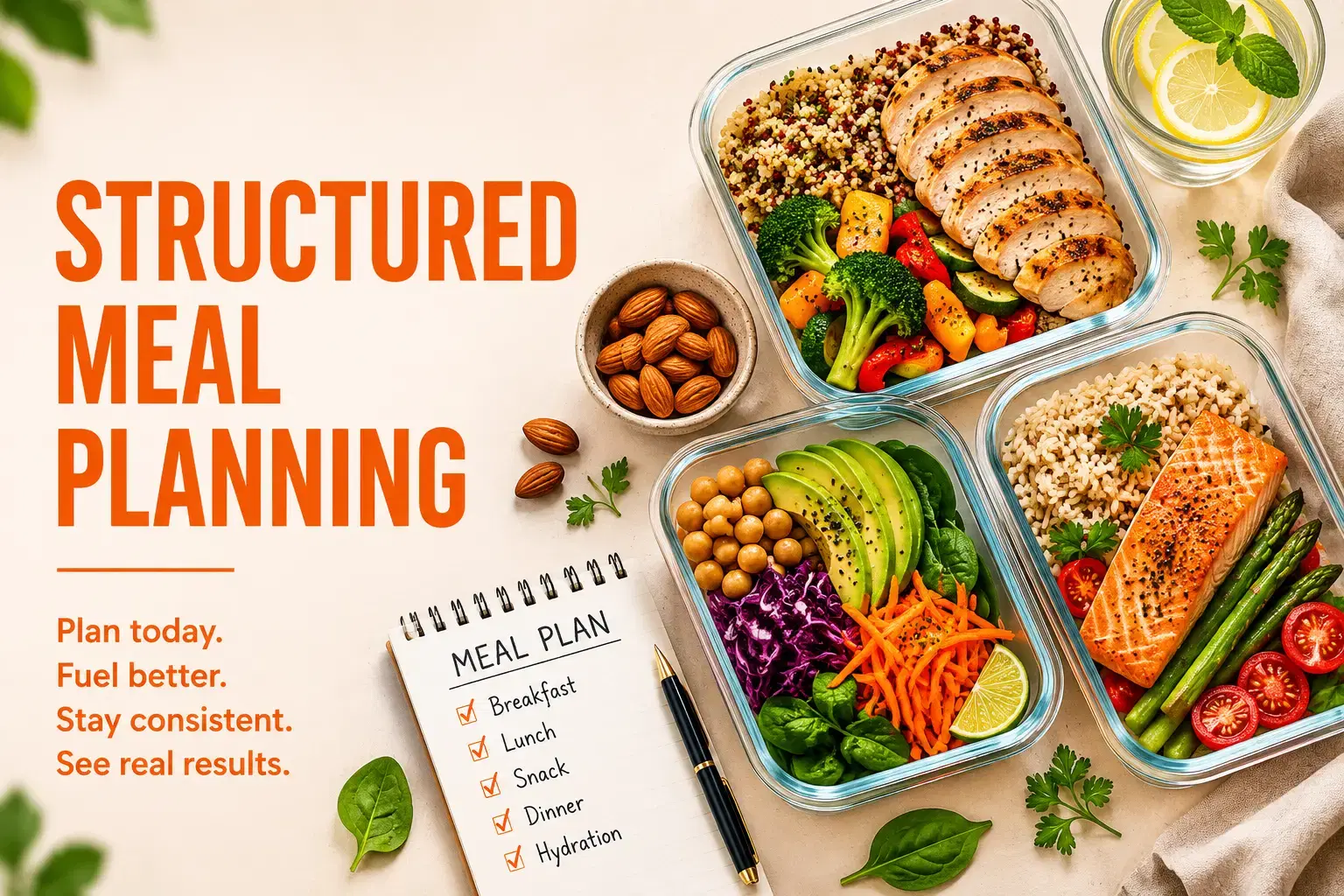
Structured Meal Planning
May 23, 2026 | 8
Meals for Bloating and Acid Reflux
May 21, 2026 | 8
Influencer Diet Culture: Why the Plan That Worked for Them Won't Work for You
May 21, 2026 | 8