Structured Meal Planning

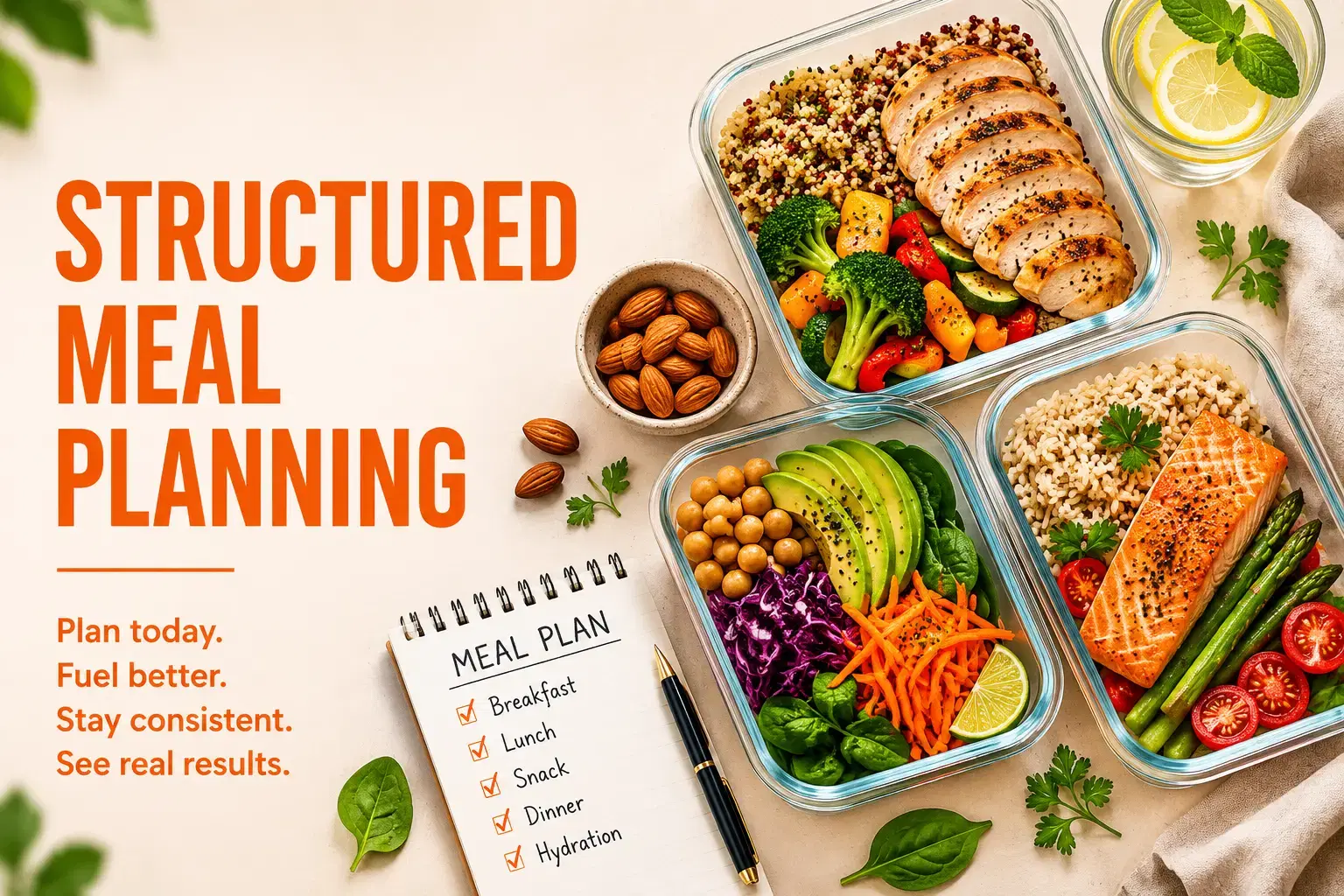
Most failed diets weren't really failed. They were finished. This article looks at the design difference between a diet and structured meal planning, why the regain cycle is an architectural outcome rather than a personal one, and what a pattern-based approach does that a goal-based diet structurally cannot.
You didn't fail your last diet. You finished it. That's a different thing.
The goal was to lose weight. You did, or nearly did, or did and then watched the scale creep back over the weeks that followed. The structure that was holding the result together had an endpoint, implied if not explicit, and when it reached that point the result went with it. Most people read this as a personal failure. It isn't. It's what diets are designed to do. A structured meal planning approach works differently, not because it's stricter or more sophisticated, but because it isn't built around a finish line at all.
A Diet Is Built to End. That's the Problem.
Think about how a diet actually works. There's a goal: lose a certain amount, fit into something, look a certain way by a certain date. There's a defined period, even if it's vague, because goals have implied endpoints. You do the thing until the thing is done. Then the diet ends.
What fills the space after it ends is the eating pattern that existed before it started. That pattern, the one that produced the result you were trying to change, didn't disappear while the diet was running. It just went quiet. Research tracking weight over five-year periods following diets found that the majority of weight lost through dietary interventions is regained within that window, with a significant portion of people returning to or exceeding their starting weight. The diets worked. The structure around them didn't last.
The regain isn't a mystery. The diet was a temporary overlay on a permanent pattern. Remove the overlay and the pattern runs again. The person who lost 8kg on a calorie deficit and regained it over the following three months didn't fail at maintaining. There was simply nothing to maintain. The diet ended, the structure dissolved, and the baseline reasserted itself. Same as it would for anyone.
People Who Keep the Weight Off Don't Have More Willpower. They Have a Different Structure.
There's a consistent finding in the research on long-term weight maintenance, the people who actually keep the weight off for years rather than months. It isn't that they're more motivated, more informed, or more disciplined about occasional lapses. The primary thing that separates them is a predictable, consistent eating pattern that runs in the background of their life without requiring constant active effort.
Studies on the characteristics of long-term weight loss maintainers found that consistent meal patterns, eating at similar times, in similar structures, across the week, were among the strongest predictors of maintained results. Not dietary perfection. Not high motivation. A pattern boring enough to just keep running.
This is what willpower actually is in a dietary context. Not a reservoir of resolve that some people have more of. It's the amount of active decision-making a person has to do around food on any given day. Someone running a consistent structured meal planning pattern isn't making heroic choices at dinner. They're not choosing. The pattern handles it. The decision was made weeks ago when the structure was set up, and it hasn't needed to be made again since.
The person who keeps eating the same way they did on the diet isn't doing something special. They just never stopped. The difference between that person and the one who regained is usually that one of them had a structure that continued past the goal and the other didn't.
What Structured Meal Planning Is That a Diet Isn't
A diet is a campaign. It has a start, a goal, and an end. Structured meal planning is infrastructure. It has a start and then it just keeps going, adjusting, but not ending.
The practical difference shows up in how the two feel over time. A diet gets harder as it continues because the motivation that launched it fades and the restriction that defines it accumulates. Structured meal planning gets easier as it continues because the decisions that made it feel like effort in week one have become the default by week eight. The meals are familiar. The timing is automatic. The cognitive load of food drops to near zero because there's nothing left to decide.
This is also why a structured plan survives the conditions that kill every diet: a stressful week, a run of late nights, a stretch where motivation disappears entirely. A diet requires active engagement to keep running. When the engagement drops, the diet drops with it. A pattern that's become automatic doesn't need engagement. It just runs. Bad weeks don't break it because the structure doesn't depend on how motivated the person feels that Tuesday.
The goal in structured meal planning isn't to finish. It's to make the eating pattern unremarkable enough that it continues without effort. That's the threshold where results hold. Not when the diet is working perfectly. When it's working invisibly.
The diet that works is the one designed to keep going after the goal.
Delicut's Performance Plan is built as structured meal planning infrastructure, not a defined dietary period. Consistent meals, timed and portioned to run in the background of a full life, without the endpoint that turns results into a temporary state. See the Performance Plan here.
Key Takeaways
You didn't fail your last diet. It ended. The structure that held the results together dissolved when the defined period was over, and the underlying pattern came back. That's what diets do. It's a design outcome, not a personal one.
People who maintain weight loss long-term aren't more disciplined. They have a consistent eating pattern that runs without requiring active decisions. The structure does the work that motivation was trying to do on the diet.
Structured meal planning has no finish line. It gets easier as it continues because the decisions that felt like effort early on become automatic. The point where results hold isn't when the plan is working perfectly. It's when the plan is working invisibly.
FAQs
Q: If I've regained weight after every diet, does that mean structured meal planning will be different?
The regain pattern is almost always a structural issue, not a metabolic one. The diets worked. The infrastructure around them didn't last. A structured plan is different because it doesn't have an endpoint to fall off. The adjustment is in what happens after the initial goal is reached: the plan continues, adjusts slightly, but doesn't stop. That continuity is what the previous diets didn't have.
Q: Does structured meal planning mean eating the same things every day?
Not exactly, but some level of consistency is part of how it works. The research on long-term weight maintenance points to predictable patterns, not identical meals. Breakfast might rotate across a few options. Lunch might vary by day. What stays consistent is the structure: when meals arrive, roughly how much, and the macronutrient balance across the day. The variety sits inside the structure rather than replacing it.
Q: What's the difference between a structured meal plan and just counting calories again?
Calorie counting is a tracking tool. It tells you where you are. It doesn't tell you what to eat, when to eat it, or how to build a pattern that runs without constant monitoring. A structured meal plan is an eating infrastructure: consistent timing, pre-decided meals, appropriate portions. You stop counting because the structure handles the calibration. The cognitive load drops because the decisions are already made. That's the difference that makes it sustainable past the first few weeks.
Trending Searches:
Best Meal Plans Dubai | Healthy Meal Plan Abu Dhabi | High-protein Meal Plan | Meal Plan Ajman | Meal Plan Al In | Meal Plan Sharjah
Saja Davood
Nutritionist, Delicut
As a Registered Nutritionist with a degree in Food Nutrition and Dietetics, Saja brings over five years of hands-on experience. She designs personalised, science-backed nutrition plans to help manage conditions such as diabetes, hypertension, obesity, PCOS, and digestive disorders. Her approach centres on Medical Nutrition Therapy (MNT), using food and lifestyle adjustments to prevent and manage chronic diseases in a practical, sustainable way.

Related Blogs

The No Refined Sugar Meal Plan
Oct 9, 2026 | 8
Delicut Introduces New Arabic Dishes to Its Menu
Sep 9, 2026 | 8
1,000 Calories vs 1,500 Calories: What's the right range for your body?
May 27, 2026 | 8
Metabolism Slowdown: The Signs Your Body Shows Before the Scale Does
May 19, 2026 | 8
The Relocation Weight Trap
May 26, 2026 | 8
Meal Plan Results First 30 Days
May 25, 2026 | 8
Weight Loss in the UAE
May 25, 2026 | 8
Structured Meal Planning
May 23, 2026 | 8
Meals for Bloating and Acid Reflux
May 21, 2026 | 8
Influencer Diet Culture: Why the Plan That Worked for Them Won't Work for You
May 21, 2026 | 8