Arabic Food: Popular Dishes and Ingredients

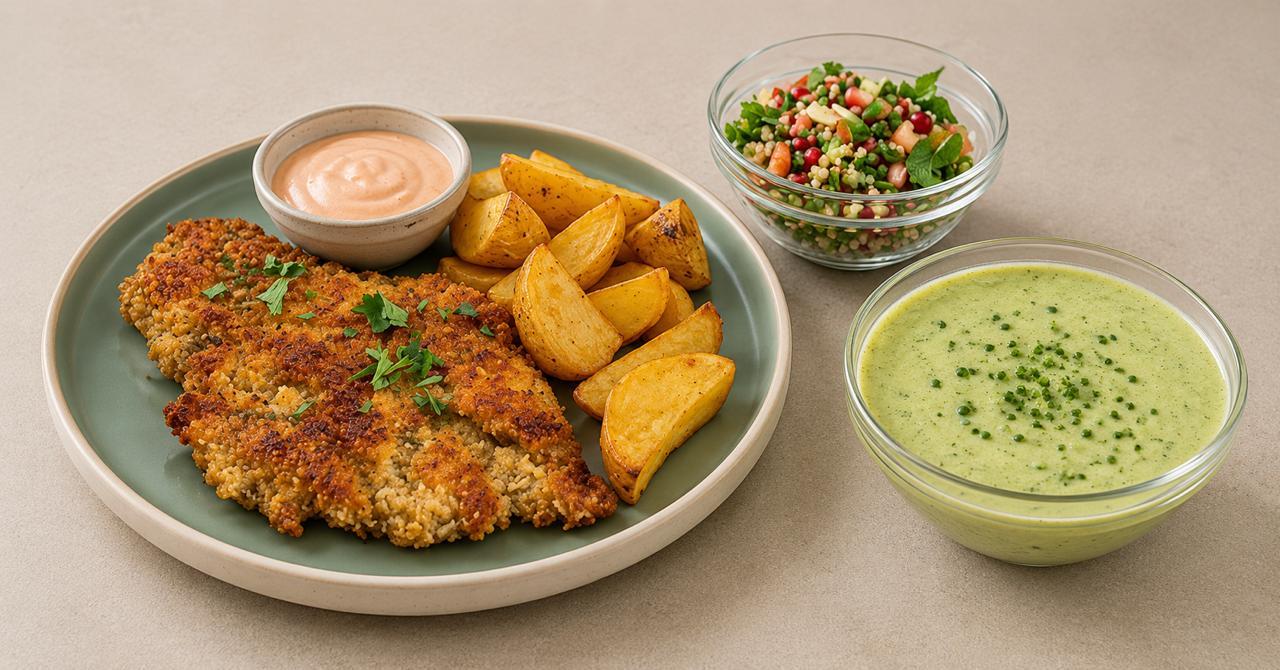
Za'atar gets used on everything across the Levant and Gulf. Flatbread in the morning, rubbed on chicken before it goes in the oven, mixed through rice. Most people eating it regularly couldn't tell you what's actually in it. Thyme, sumac, sesame, salt. And a research track, as it turns out, that goes quite a bit deeper than most spice blends on a kitchen shelf.
That gap between knowing the dish and knowing what's in it is what this blog is for. Popular Arabic dishes across the Gulf, the Levant, and North Africa. The key ingredients behind those dishes, what they contribute calorically, and what the science says about them. Plus how Delicut has taken all of that and built it into a plan with actual macros, clean ingredients, and portions calibrated for your goals rather than a shared table.
Popular Arabic Dishes Worth Knowing
Arabic food spans three distinct regional traditions. Gulf cuisine, Levantine food, and North African cooking all share certain ingredients and methods but developed separately. The 20 dishes below cover all three.
|
Dish |
Description |
Protein |
|---|---|---|
|
Kabsa |
Fragrant spiced rice with chicken or lamb, saffron, dried lime and tomatoes |
Chicken / Lamb |
|
Mandi |
Slow-cooked meat over aromatic rice, traditionally pit-roasted for deep smokiness |
Chicken / Lamb |
|
Machboos |
Spiced rice with meat and dried lime, similar to Kabsa but with a coastal character |
Chicken / Lamb / Fish |
|
Harees |
Slow-cooked cracked wheat and chicken, one of the oldest Gulf dishes still eaten daily |
Chicken |
|
Mansaf |
Slow-cooked lamb in fermented dried yoghurt (jameed), served over rice |
Lamb |
|
Jareesh |
Crushed wheat slow-cooked in broth, hearty, warming, deeply traditional |
Chicken |
|
Hummus |
Chickpea and tahini dip eaten daily across Lebanon, Syria, Palestine and the Gulf |
Vegetarian |
|
Fattoush |
Fresh herb salad with sumac, seasonal vegetables and crispy flatbread |
Vegetarian |
|
Kibbeh |
Ground meat and bulgur croquettes with a spiced filling |
Lamb / Beef |
|
Musakhan |
Slow-cooked chicken over flatbread with caramelised onion and sumac |
Chicken |
|
Tabbouleh |
Finely chopped parsley, mint, bulgur, tomato and lemon, very herb-forward |
Vegetarian |
|
Baba Ghanoush |
Smoky roasted aubergine blended with tahini and garlic |
Vegetarian |
|
Shawarma |
Marinated slow-roasted meat in flatbread with garlic or tahini sauce |
Chicken / Lamb |
|
Tagine |
Slow-braised meat with dried fruits, preserved lemon and warm spices |
Chicken / Lamb |
|
Shakshuka |
Eggs poached in a spiced tomato and pepper sauce |
Eggs / Vegetarian |
|
Harira |
Thick lentil and tomato soup, warming and fibre-rich |
Vegetarian / Lamb |
|
Couscous bil Khodra |
Steamed semolina with slow-cooked vegetables and aromatic broth |
Vegetarian |
|
Merguez |
Spiced lamb or beef sausage, traditionally grilled over charcoal |
Lamb / Beef |
|
Falafel |
Baked or fried spiced chickpea patties, high protein and plant-based |
Vegetarian |
|
Maqluba |
Upside-down rice layered with vegetables and meat, served turned out at the table |
Chicken / Lamb |
The Ingredients That Define Arabic Food, and What They Actually Contain
The dishes above share a core set of ingredients. These are what give Arabic food its character and, as it happens, where most of the nutritional story lives.
Za'atar
Thyme, sumac, sesame seeds, salt. That's the base, though the ratios shift by region and household. Used as a dip mixed with olive oil, a dry rub for chicken, a seasoning for rice, a spread on flatbread before baking. As a flavour ingredient it contributes roughly 20 kcal per tablespoon. Not a food group. A flavour.
The nutritional case for za'atar is less obvious than for a legume or a fruit, but it's there. A review published in Antioxidants found the blend contains hundreds of antioxidant compounds, particularly polyphenols and fibre, with pre-clinical and clinical evidence of health-promoting effects in cardiovascular and metabolic disease. Sumac and thyme carry most of that.
On the Delicut menu: Levantine Zaatar Chicken & Couscous, Zaatar Rice with Creamy Spinach Chicken, Zaatar Chicken Escalope & Potato Wedges, Lebanese-Style Chicken Musakhan & Pita.
Tahini
Roasted sesame seeds, ground into a paste. That's it. The base of hummus, the sauce on falafel, the drizzle over grilled meat. Around 595 kcal per 100g, which sounds significant until you look at how it's actually used. A tablespoon is roughly 90 kcal, and it delivers protein, healthy fat, vitamin E, and a set of compounds called lignans, sesamin and sesamol, which have a documented antioxidant effect.
There's a clinical study specifically on tahini consumption in healthy men, published on PubMed, that found a statistically significant decrease in diastolic blood pressure and pulse rate. Not sesame oil. Not sesame seeds in capsule form. Tahini, eaten as food. Worth noting that the research exists at that level of specificity.
On the Delicut menu: Creamy Tahini Chicken Fettuccine, Classic Falafel Wrap, Turkish Chicken Doner.
Legumes: Chickpeas, Lentils and Fava Beans
Not a health addition to Arabic food. The base of it, across most regions. Lentil soup in the Gulf and Levant. Chickpeas in hummus and falafel. Fava beans from Egypt through North Africa. This is what people were eating day to day before anyone started calling them superfoods.
The numbers hold up well. Cooked chickpeas: 164 kcal per 100g, with 9g protein and 7g fibre in that same serving. Lentils: 116 kcal per 100g, 9g protein, 8g fibre. Strong macro return for the calories.
A meta-analysis published in Advances in Nutrition, drawing from multiple large prospective cohort studies, found higher legume consumption significantly associated with lower cardiovascular and coronary heart disease risk across populations. The daily Arabic diet built on legumes centuries before that study existed.
On the Delicut menu: Bulgur Pilaf (chickpeas), Classic Falafel Wrap (lentil soup), Middle Eastern Fish Sayadieh (broad beans).
Saffron
Half a gram goes into a dish, sometimes less. The caloric contribution rounds to zero. What it does contribute nutritionally is a different question. A review published in Nutrients found saffron's primary compounds, crocins and safranal, to be antioxidant and anti-inflammatory agents with measurable effects on oxidative stress markers in clinical settings.
The world's most expensive spice by weight also has considerably more clinical research behind it than you'd expect from a flavouring.
On the Delicut menu: Salmon Harra with Saffron Rice, Persian One-Pot Mixed Grill.
The Spice Blends: Cumin, Cinnamon and Cardamom
These three appear in almost every Arabic rice dish and slow-cooked stew. Even used generously, spices contribute less than 10 kcal per dish. Zero is effectively the right number. What they're doing biologically is a different story.
A review in the Journal of Translational Medicine found their active compounds to be significant inhibitors of the NF-kB inflammatory pathway, linked to cardiovascular disease and chronic inflammation. A separate analysis of randomised controlled trials on cardamom found measurable drops in C-reactive protein. Zero caloric cost, non-trivial biological effect.
On the Delicut menu: Present across most Arabic dishes. Yemeni Chicken Mandi, Saudi-Style Chicken Bukhari Rice, Lamb Stew with Machboos Rice, among others.
Pomegranate
Seeds in fattoush and grain salads. Molasses in marinades and dressings. The seeds run at around 83 kcal per 100g with negligible fat, so in a salad or as a garnish the caloric contribution stays low. The antioxidant density does not.
Research from the Rappaport Faculty of Medicine at the Technion, published in Rambam Maimonides Medical Journal, found pomegranate polyphenols superior to other antioxidants in protecting LDL and HDL from oxidation, with documented blood pressure-lowering effects. The antioxidant capacity exceeds that of red wine and green tea, which is not a small claim.
Olive Oil
884 kcal per 100g. That number gets cited a lot, usually without the context that traditional Arabic cooking doesn't deep-fry in olive oil. It goes in as a drizzle on hummus, a small amount in a stew base, a light dressing on tabbouleh. The amount per dish is usually a long way from what the 100g figure implies.
A systematic review across 17 clinical studies, published in PMC, found extra-virgin olive oil consumption associated with reduced cardiovascular disease risk, with polyphenol content credited for the effect. Olive oil is also one of the places Delicut consciously reduced quantities in dishes. The spice blends carry the flavour. The oil reduction is what makes the calorie numbers work.
Arabic Food That Actually Works For Your Goals
Knowing what's in the food matters. Getting it into a week that moves you toward your goals is a different problem. This is what Delicut built for.
Two plans, one rotating menu
Delicut's Arabic dishes sit across two plan structures depending on what you're working toward.
The Balanced Plan runs at 40 to 50% carbs, 20 to 25% protein, and 25 to 30% fat. Rice dishes, stews, bulgur, wraps. Most of the Arabic menu lives here. Yemeni Chicken Mandi, Lamb Stew with Machboos Rice, Bulgur Pilaf with chickpeas, Zaatar Rice with Creamy Spinach Chicken.
The LCHP plan (Low Carb, High Protein) runs at 20 to 30% carbs, 35 to 45% protein, and 30 to 45% fat. Grilled proteins, fish dishes, lower-carb options. Middle Eastern Fish Sayadieh, Persian One-Pot Mixed Grill, Salmon Harra with Saffron Rice.
Same cuisine. Different macro targets. Both in the rotation every week.
Portions calibrated for a plan, not a table
Arabic food served at home or at a restaurant is portioned for sharing. Generous by design. That's a feature of the culture, not a flaw in the food. It just isn't designed for tracking.
Every Delicut dish is portioned individually, sized to the plan. For most dishes on the menu, that's genuinely the only adjustment that was needed. Same recipe, same food, right portion on the plate.
What changed, and what didn't
Less oil. Reduced sugar where it appeared. Leaner meat cuts where the dish supports it. Some dishes have grain or base alternatives swapped in where the substitution works without changing what the food tastes like. Some dishes haven't been touched at all: same spices, same method, same recipe, just the right individual portion rather than a sharing one.
The point wasn't to make Arabic food something it isn't. Most of it works well for health goals already, at the right portion. Delicut's job was to make that accessible without making the food feel managed.
The full Arabic menu is at delicut.ae. Weekly rotation, fresh daily, delivered across the UAE.
FAQs
Q: Is the food halal?
Yes. All dishes on the Delicut menu, including the full Arabic lineup, are halal.
Ready to Try?
Delicut's Arabic dishes are available now across the Balanced and LCHP plans, rotating weekly alongside 50+ chef-prepared dishes from global cuisines. Fresh daily, portioned to your plan, delivered across the UAE. Start at delicut.ae.
Saja Davood
Nutritionist, Delicut
As a Registered Nutritionist with a degree in Food Nutrition and Dietetics, Saja brings over five years of hands-on experience. She designs personalised, science-backed nutrition plans to help manage conditions such as diabetes, hypertension, obesity, PCOS, and digestive disorders. Her approach centres on Medical Nutrition Therapy (MNT), using food and lifestyle adjustments to prevent and manage chronic diseases in a practical, sustainable way.

Related Blogs

Arabic Food: Popular Dishes and Ingredients
Sep 9, 2026 | 8
Delicut Introduces New Arabic Dishes to Its Menu
Sep 9, 2026 | 8
1,000 Calories vs 1,500 Calories: What's the right range for your body?
May 27, 2026 | 8
Metabolism Slowdown: The Signs Your Body Shows Before the Scale Does
May 19, 2026 | 8
The Relocation Weight Trap
May 26, 2026 | 8
Meal Plan Results First 30 Days
May 25, 2026 | 8
Weight Loss in the UAE
May 25, 2026 | 8
Structured Meal Planning
May 23, 2026 | 8
Meals for Bloating and Acid Reflux
May 21, 2026 | 8
Influencer Diet Culture: Why the Plan That Worked for Them Won't Work for You
May 21, 2026 | 8