Why Your IBS Diet Plan Isnt Working

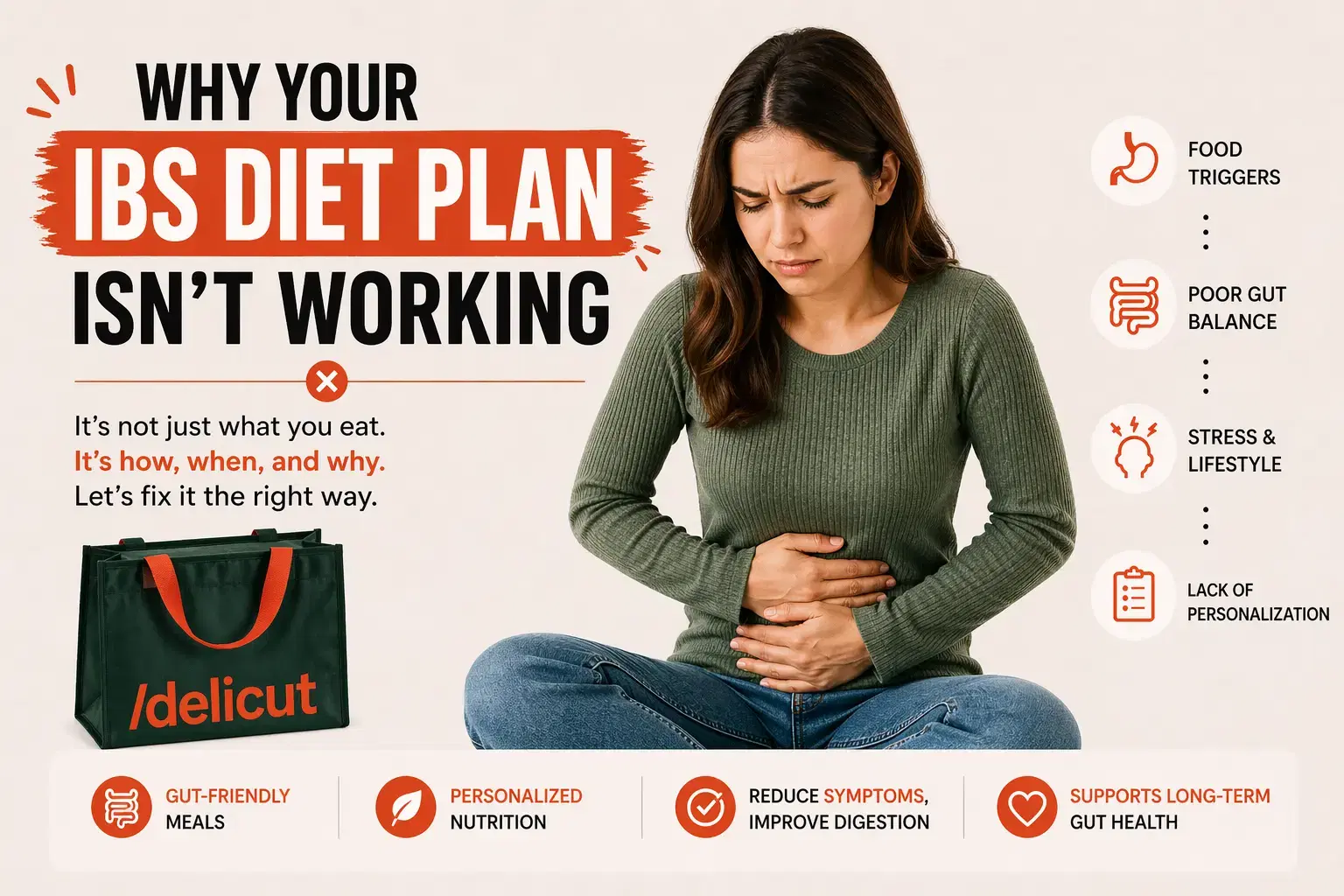
You've cut gluten. Gone dairy-free. You've got a food diary with more entries than your actual journal. And your gut? Still doing whatever it wants. Here's the uncomfortable truth: an IBS diet plan built on random elimination isn't really a plan. It's a guess. And your gut is terrible at responding to guesswork.
The Real Problem With DIY Elimination
Most people start the same way: pick a food that feels suspicious and cut it. Gluten's usually first. Then dairy. Sometimes both at once, which makes figuring out anything basically impossible.
IBS symptoms aren't set off by one food type. They're triggered by a group of fermentable carbohydrates called FODMAPs, which ferment in the gut and cause all the bloating, cramping, and unpredictability. When you cut one food without a system, you're pulling one card from a very full deck and hoping for the best.
The pattern plays out consistently: cut something, feel slightly better for a few weeks, then symptoms creep back. The conclusion? The diet stopped working. But it was never targeting the right thing to begin with. Two people with identical IBS diagnoses can have completely different IBS food triggers. That's how varied it is.
The Low-FODMAP diet works differently. It's a structured three-phase process: eliminate all high-FODMAP foods for 2 to 6 weeks to get a clean symptom baseline, then reintroduce categories one at a time to find YOUR specific triggers. According to a 2021 systematic review, this approach significantly improves overall IBS symptoms across all subtypes. That's a completely different game from 'I'll skip bread and see what happens.'
Why Up to 86% of IBS Patients See Results (But Most Never Get There)
The numbers on Low-FODMAP are genuinely good. A 2016 clinical review found that up to 86% of IBS patients improved on the protocol, compared to just 49% on standard dietary advice. That gap is significant. But it only shows up when you actually finish all three phases.
Most people don't. They find a simplified version online, follow the elimination phase reasonably well, skip reintroduction because it feels complicated, and draw conclusions from half the process.
Reintroduction isn't the boring admin part you get through to reach the 'real' diet. It's actually the whole point. That's the phase where you find out which foods are YOUR problem, not just which ones appear on a general FODMAP elimination list. Without it, you stay stuck on a very restricted diet indefinitely and never get the actual answer you started this for. The diet didn't fail. The process just never finished.
Sustainable Management Means Eating a Real Diet Again
The whole goal of a proper irritable bowel syndrome diet isn't to eat less and less over time. It's to end up with a wider, more flexible diet than when you started. Once you know your actual triggers, you only need to limit those specific foods. Not everything.
The trap: people make it through elimination and just stay there. Permanent restriction becomes the plan. That creates nutrient gaps, food anxiety, and a social life that mostly revolves around apologizing at restaurants.
Think of it simply. Elimination = reset. Reintroduction = your personal trigger map. What follows = informed flexibility. Staying stuck in phase one forever is a bit like restarting your phone every day and never actually using it. The goal was never the restriction itself.
Tired of negotiating every meal from scratch?
If you're managing IBS symptoms and need consistent, gut-friendly meals without rebuilding everything from zero, Delicut's customizable meal plans let you set your dietary requirements and they handle the rest, delivered across the UAE. For a solid gut-health starting framework, their 20-day gut health plan is worth a look as a reference point for building your post-FODMAP routine.
Key Takeaways
- Stop cutting randomly. Start the three-phase Low-FODMAP protocol, in order, all the way through.
- Never skip reintroduction. That's the phase that identifies YOUR triggers, not a general list from the internet.
- If symptoms came back after a dietary change, it usually means the process was incomplete, not that the diet failed.
- The goal is a wider, more flexible diet. If you're still in full elimination mode, you haven't finished the process yet.
FAQs
Q: I tried Low-FODMAP and it didn't really help. What gives?
If elimination didn't bring any relief, it's worth checking whether the protocol was fully followed. It's also possible there's a non-dietary driver involved, like stress, sleep issues, or an undiagnosed condition that looks like IBS. Getting a confirmed IBS diagnosis before starting any structured diet is a good first move.
Q: Can I do Low-FODMAP without seeing a dietitian?
You can, but the protocol is more nuanced than most online guides suggest. A dietitian helps you avoid nutritional gaps during elimination and makes the reintroduction phase a lot clearer to read. Most people who 'did Low-FODMAP' and got inconsistent results skipped this support.
Q: Why does a food feel fine some days but trigger symptoms on others?
FODMAP tolerance is cumulative. A small amount of a moderate-FODMAP food might be fine on its own, but stack a few moderate ones across one meal and your total load tips over your personal threshold. This stacking effect is exactly why removing one food never gives clean, consistent results.
Q: Will Low-FODMAP cure my IBS?
No, and it's not designed to. IBS is a chronic condition. Low-FODMAP is a management tool that helps you identify and reduce your specific triggers so you can eat more freely with fewer surprises. Better daily control is the win, not a permanent fix.
Saja Davood
Nutritionist, Delicut
As a Registered Nutritionist with a degree in Food Nutrition and Dietetics, Saja brings over five years of hands-on experience. She designs personalised, science-backed nutrition plans to help manage conditions such as diabetes, hypertension, obesity, PCOS, and digestive disorders. Her approach centres on Medical Nutrition Therapy (MNT), using food and lifestyle adjustments to prevent and manage chronic diseases in a practical, sustainable way.

Related Blogs
Build Your Own Meal Plan
Apr 20, 2026 | 8
Your Carnivore Diet Plan Isn't Broken
Apr 18, 2026 |
3000 Calories Isnt 'Eating a Lot' If You're This Active
Apr 17, 2026 | 8
OMAD Effects on Muscle
Apr 9, 2026 | 8
Why Your IBS Diet Plan Isnt Working
Apr 3, 2026 |
The easiest way to eat healthy in UAE without cooking or overspending
Mar 30, 2026 | 8
The Burnout Diet
Jan 30, 2026 | 8
The mental load of “What should I eat today?"
Jan 22, 2026 | 8
The real glow-up starts with your gut health
Jan 14, 2026 | 8
Healthy food that doesn’t taste like “Diet Food”
Jan 17, 2026 | 8