3000 Calories Isnt 'Eating a Lot' If You're This Active


You train consistently. You eat reasonably clean. No junk, no late-night binges, mostly whole foods. But you are tired in a way that sleep does not fix. Your workouts have plateaued. Recovery is slower than it used to be. You have started wondering if you are doing too much.
Here is a different possibility: you are not doing too much. You are eating too little. And for your active body, a 3000 calorie meal plan is not aggressive. It might be exactly what maintenance looks like.
The Calorie Baseline You Were Given Was Built for Someone Else
Most nutrition messaging was built around sedentary or lightly active people. The '2000 calories a day' figure became shorthand for a normal intake because for someone sitting at a desk all day, it roughly is. It has nothing to do with what your body actually burns.
Total Daily Energy Expenditure (TDEE) scales with activity. For someone training four to five times a week with an otherwise active day, caloric needs regularly sit between 2700 and 3200 calories just to maintain current weight. Not to build, not to improve performance. Just to stay where you are.
Research on energy expenditure across active populations confirms that even moderate activity levels generate calorie demands well above sedentary baselines, and that active individuals consistently under-report and under-meet those demands.
What active people intend: eat healthy and reasonably and assume that covers it.
What actually happens: they apply sedentary-baseline logic to an active body and land 400 to 700 calories short every day.
Why the gap: nutrition advice was calibrated for the wrong audience. A 3000 calorie meal plan for an active person is not aggressive. It is often just accurate.
What Under-Fuelling Actually Does to an Active Body
Low energy availability is the state of chronically eating less than your activity level requires. It is not something that only affects elite athletes. It happens to anyone whose intake consistently falls short of their output.
A 2020 review on low energy availability in athletes found that even modest daily shortfalls of 300 to 700 calories accumulated over weeks of training contribute to endocrine disruption, reduced recovery capacity, impaired performance, and higher injury risk. Those symptoms look exactly like overtraining: fatigue, mood dips, slow healing, plateaued results.
That is the trap. You feel exhausted so you assume you need rest. You take a week off. You come back and nothing has changed. Because the problem was never training volume. It was fuel.
Research on consequences of chronic low energy availability shows that your metabolic rate begins adapting downward within days of insufficient intake. Your body becomes more efficient at running on less. That masks the damage being done, which makes the problem harder to identify.
The mistake: treating fatigue and slow recovery as a training problem when the actual cause is a fuelling gap.
The resolution: match intake to output. For a genuinely active body, a 3000 calorie meal plan is the baseline that keeps the system running.
Why Structure Is the Only Way to Hit Your Caloric Needs Consistently
Knowing you need more calories does not automatically solve the problem. A busy meal plan UAE lifestyle creates daily friction. Meals get skipped when the schedule fills up, lunch gets grabbed quickly, dinner lands late. The result is an average intake that looks nothing like the target.
Unlike the hardgainer who knows they need to eat more, the under-fuelled active person often does not realise they are short. They eat three times a day, the food is clean, nothing feels obviously wrong. The gap is invisible until the body starts flagging it through fatigue and stalled performance nutrition.
Pre-structured active lifestyle nutrition removes the guesswork. When your meal plan is already calculated and prepared, hitting caloric needs becomes a matter of eating what is in front of you. No tracking, no calculating, no fighting your schedule.
Tired is not a training problem. It is usually a fuelling problem.
Delicut's Essentials Plan gives you one structured meal plan per day calibrated to your caloric needs, fully prepared, zero daily decisions. If your 3000 calorie meal plan target keeps getting missed because life gets in the way, this removes that barrier entirely. Performance nutrition should not require a perfect schedule to work. Explore the Essentials Plan here.
Key Takeaways
Calculate your actual TDEE this week using your real activity level. Most active people discover their caloric needs sit 500 to 800 calories above what they currently eat.
Check your food before you cut your training. Under-fuelling and overtraining produce the exact same symptoms. Most active people diagnose the wrong one first.
Stop using the sedentary 2000 calorie baseline as your reference. A 3000 calorie meal plan for an active body is maintenance, not excess.
Build structure into your meal plan UAE routine. Knowing your caloric needs means nothing if your schedule prevents you from consistently hitting them.
FAQs
Q: How do I know if I need 3000 calories or less?
Calculate your TDEE based on your real activity level. If you train four or more times a week and move throughout the day, 2800 to 3200 calories is a realistic maintenance range for most active adults.
Q: Won't eating 3000 calories make me gain fat if I am already at a healthy weight?
Not if 3000 matches your TDEE. Maintenance calories maintain your weight. The fear comes from applying sedentary logic to an active body, and it is almost always wrong.
Q: What if I am not hungry enough to eat 3000 calories?
Appetite suppression is common in people who chronically under-fuel. Your body adapts by reducing hunger signals. A structured meal plan sidesteps this. You eat the plan, not your appetite.
Q: Is this relevant if I am also managing weight loss and obesity alongside activity?
Weight loss and obesity management in active people requires enough fuel to support the training that drives fat loss. Cut too hard and performance tanks, metabolism slows, and sustainable results become harder to reach.
Trending Searches:
Meal Plan Dubai | Affordable Meal Plans Abu Dhabi | Meal Plan Ajman | Meal Plan Al In | Meal Plan Sharjah | Meal Plan Subscription
Saja Davood
Nutritionist, Delicut
As a Registered Nutritionist with a degree in Food Nutrition and Dietetics, Saja brings over five years of hands-on experience. She designs personalised, science-backed nutrition plans to help manage conditions such as diabetes, hypertension, obesity, PCOS, and digestive disorders. Her approach centres on Medical Nutrition Therapy (MNT), using food and lifestyle adjustments to prevent and manage chronic diseases in a practical, sustainable way.

Related Blogs

Delicut Introduces New Arabic Dishes to Its Menu
Sep 9, 2026 | 8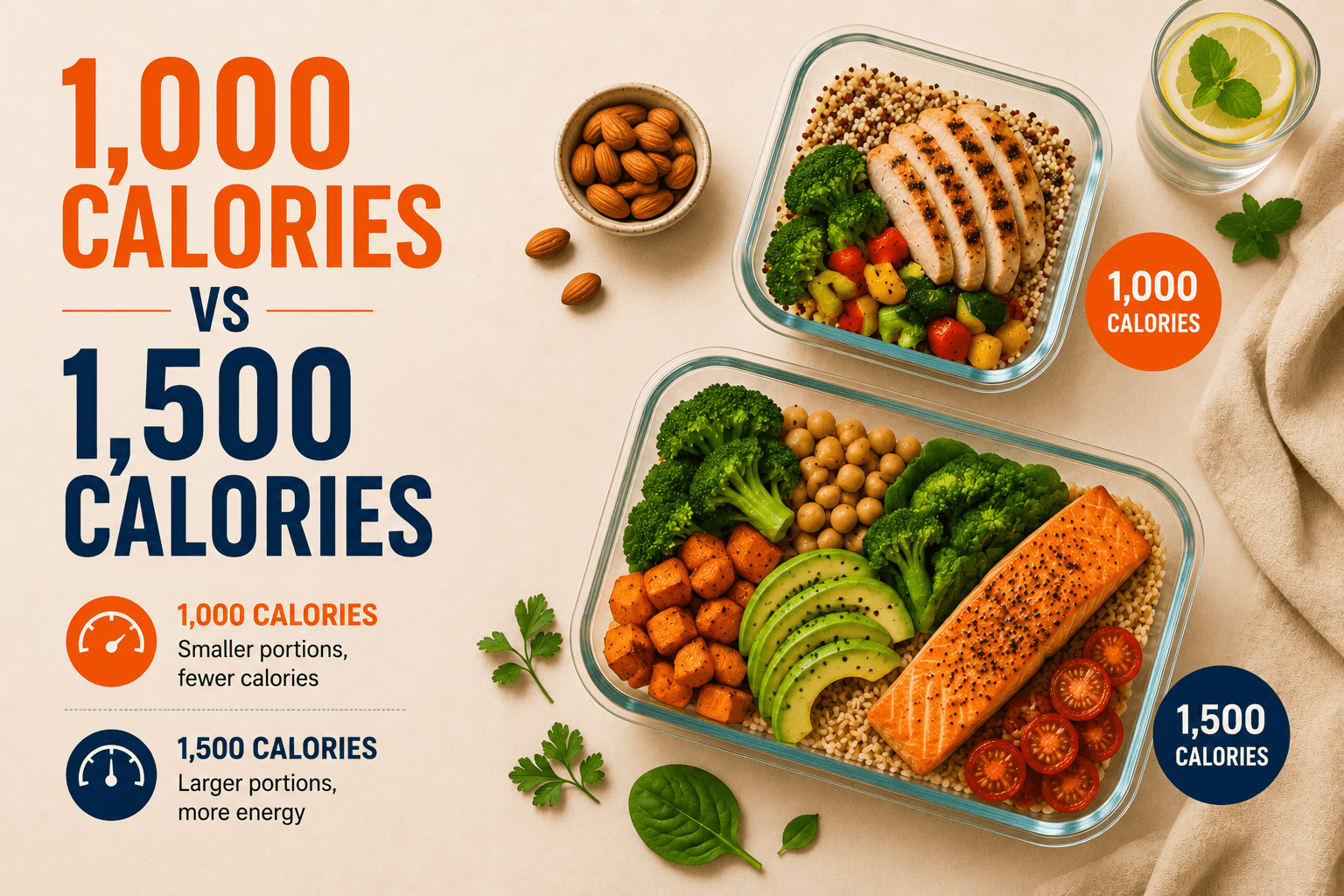
1,000 Calories vs 1,500 Calories: What's the right range for your body?
May 27, 2026 | 8
Metabolism Slowdown: The Signs Your Body Shows Before the Scale Does
May 19, 2026 | 8
The Relocation Weight Trap
May 26, 2026 | 8
Meal Plan Results First 30 Days
May 25, 2026 | 8
Weight Loss in the UAE
May 25, 2026 | 8
Structured Meal Planning
May 23, 2026 | 8
Meals for Bloating and Acid Reflux
May 21, 2026 | 8
Influencer Diet Culture: Why the Plan That Worked for Them Won't Work for You
May 21, 2026 | 8
Appetite Suppression: Why Coffee, Cigarettes, and Skipped Meals Make You Hungrier
May 18, 2026 |