
Arabian Dishes Names: A Guide to Delicut's Arabic Food Menu
Oct 22, 2026 | 8 min
Machboos. Maqluba. Mansaf. Mandi. If you've ordered from the Delicut Arabic menu and wondered what any of these actually are, you're not alone, the names land without context when you haven't grown up eating them.
Arabic dish names have a logic, though. Most of them describe something real: the cooking method, what the dish looks like when served, where it came from, or what happens to it during preparation. Maqluba means "upside down." Mandi comes from a word for dew. Sayadieh means "fisherman's." Once the name clicks, the dish stops being abstract.
This guide goes through all 20 Arabic dishes on the Delicut menu, what the name means, what's in it, and what matters before you order.
All Arabic Dishes on the Delicut Menu
|
Dish Name |
Protein |
|---|---|
|
Prawns Mashawi |
Shrimps |
|
Levantine Zaatar Chicken & Couscous |
Chicken |
|
Persian One-Pot Mixed Grill |
Chicken, Lamb, Beef |
|
Salmon Harra with Saffron Rice |
Salmon |
|
Turkish Chicken Doner |
Chicken |
|
Middle Eastern Fish Sayadieh |
White Fish |
|
Yemeni Chicken Mandi |
Chicken |
|
Lebanese Kafta & Vermicelli Rice |
Lamb |
|
Persian Style Chicken & Rice |
Chicken |
|
Classic Falafel Wrap |
Vegetarian |
|
Bulgur Pilaf |
Chicken / Salmon |
|
Zaatar Rice with Creamy Spinach Chicken |
Chicken |
|
Lebanese-Style Chicken Musakhan & Pita |
Chicken |
|
Lamb Stew with Machboos Rice |
Lamb |
|
Zaatar Chicken Escalope & Potato Wedges |
Chicken |
|
Creamy Tahini Chicken Fettuccine |
Chicken |
|
Chicken Maqluba |
Chicken |
|
Lamb Shank Mansaf |
Lamb |
|
Saudi-Style Chicken Bukhari Rice |
Chicken |
|
Middle Eastern Beef Stew & Green Pea Rice |
Beef |
Arabic Rice Dish Names and What They Mean
Rice dishes dominate the Arabic table, and each name tells you something the dish can't tell you just by looking at it. The cooking method, the origin, the texture, all of it is usually buried in the name.
Yemeni Chicken Mandi
"Mandi" comes from "nada", the Arabic word for dew. The reference is to the moisture retained when meat cooks slowly inside a sealed pit over wood smoke. The steam has nowhere to go. The meat absorbs it. You can't replicate that in a standard oven, and anyone who's had real Yemeni mandi will tell you that quickly.
What Delicut serves: tender chicken over aromatic mandi rice, with yoghurt and tomato dip. The spice profile on mandi is clean and restrained, the smoke and the slow heat are doing the flavour work, not a heavy marinade.
Lamb Stew with Machboos Rice
Machboos (also written Majboos) is the Gulf's one-pot dish, rice and protein cooked together in spiced liquid until everything has absorbed everything else. The name comes from the Arabic root for "pressed" or "tightly packed," which describes how the layers cook down together in the pot.
IThe lamb version runs deeper and richer than the chicken version, the meat needs longer, and that time shows up in the sauce.
Delicut serves it over machboos rice with a tangy sauce and mint yoghurt. Saffron is in the rice, which is where the colour comes from. Research published in Frontiers in Medicine, 10 identified antioxidant compounds in saffron at amounts comparable to culinary use, but the reason it's in machboos is the flavour, not the research.
Chicken Maqluba
"Upside down." That's the translation, and it's the whole point of the dish. You build it in layers in a pot, rice on the bottom, then vegetables, then meat, cook it until it holds, then flip the entire thing onto a serving platter. The bottom becomes the top. When it works, it looks like a moulded rice cake. When it doesn't, you have a very flavourful pile.
Delicut's version uses aromatic rice layered with vegetables and tomato sauce, topped with cucumber yoghurt. The yoghurt isn't optional, it's how maqluba is supposed to be eaten.
Saudi-Style Chicken Bukhari Rice
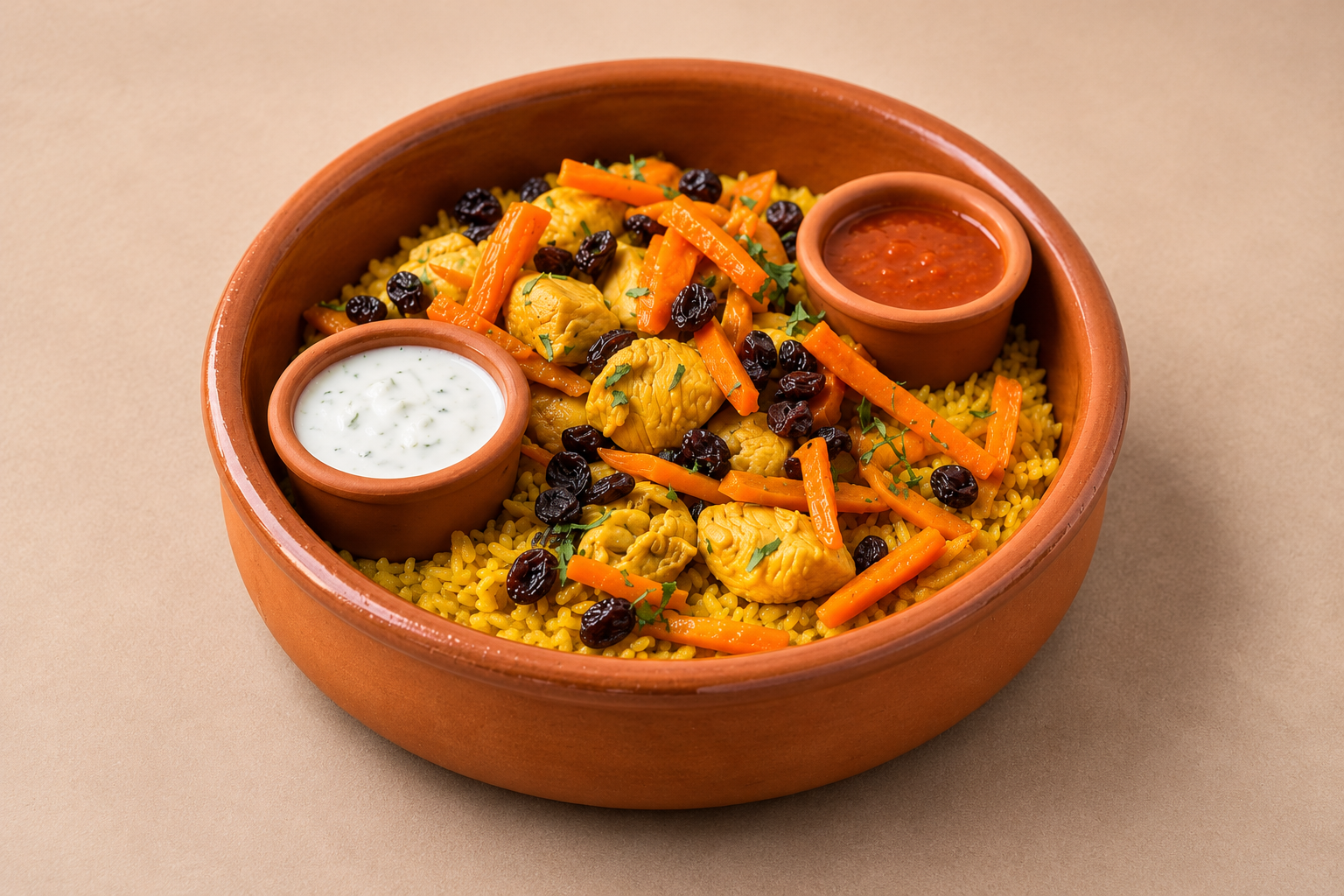
The name comes from Bukhara, the city in present-day Uzbekistan. The dish arrived in Saudi Arabia through centuries of trade and pilgrimage routes running through Central Asia, and brought a preparation detail that Gulf rice cooking didn't already have: you fry the raw rice first before the liquid goes in. That produces a slightly toasted, nutty base that boiled rice never achieves.
Delicut's version: fragrant rice with chicken, carrots, and raisins. The raisins aren't decoration, the sweetness is part of the balance. That's the Central Asian influence showing up in a Saudi dish.
Middle Eastern Beef Stew and Green Pea Rice
No single Arabic name sits behind this one the way mandi or machboos does. It's built on a pan-Arabic stew tradition: beef and white beans with okra, served over green pea rice.
Okra is called bamia in Arabic. It thickens the sauce and adds fibre without significantly changing the calorie load. The white beans bring plant protein alongside the beef. The green pea rice is lighter than plain white rice because of the added fibre from the peas.
Arabic Seafood Dish Names on the Delicut Menu
Coastal Arabic cooking, particularly Lebanese, Omani, and Emirati has a serious seafood tradition. Three dishes on the Delicut menu come directly from that heritage.
Prawns Mashawi
"Mashawi" means "grilled." It's the collective word for grilled foods across the Arab world, a mashawi platter at a restaurant is a mixed grill of different proteins. Here it refers to sautéed prawns with fragrant rice and a creamy yoghurt sauce.
Prawns are one of the leaner options across the whole Delicut menu. High protein, low fat, a calorie count that stays well below most of the red meat dishes at equivalent portion sizes.
Middle Eastern Fish Sayadieh
"Sayadieh" comes from "sayyad", fisherman. It's a Lebanese coastal dish: white fish over caramelised onion rice, usually finished with toasted nuts. The onions cook long enough to turn sweet, which balances the fish. That balance is the point of the dish.
Delicut's version comes with cucumber yoghurt and roasted broad beans. The broad beans aren't an afterthought, they add plant protein and fibre that shift the macro split meaningfully. A review published in Nutrients found legume inclusion in meals contributed to reduced appetite and more stable post-meal blood sugar. The broad beans here are doing nutritional work alongside the fish.
Salmon Harra with Saffron Rice
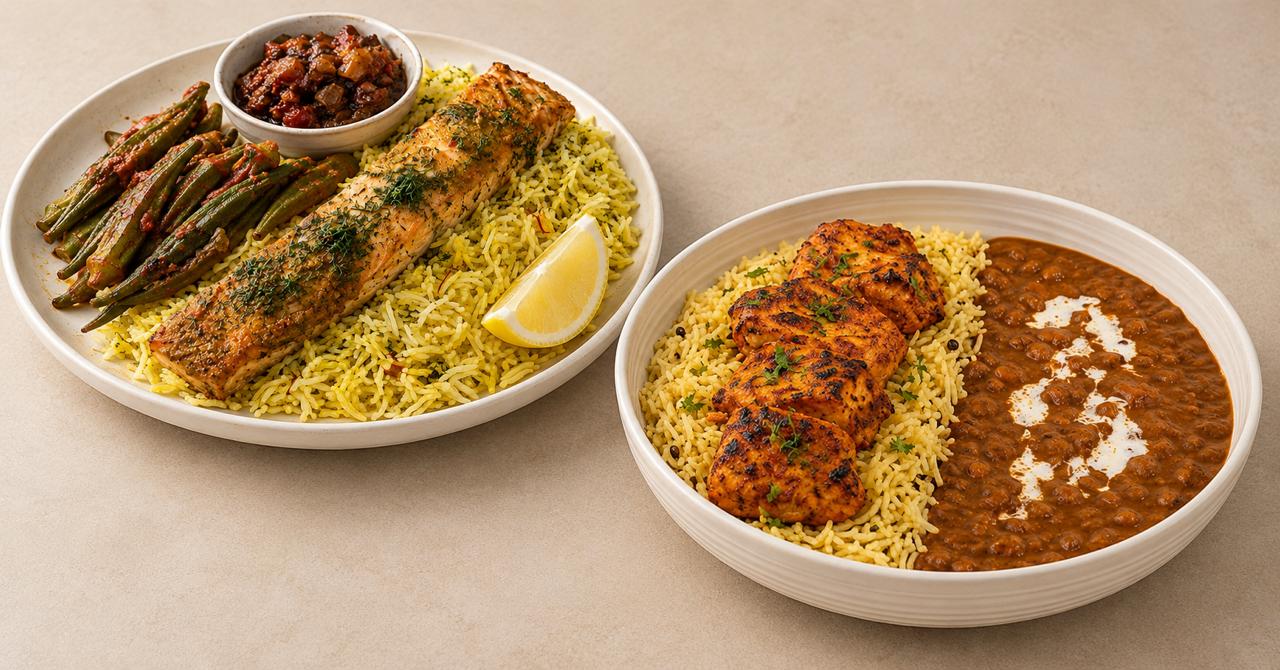
"Harra" means hot or spicy. Samke harra, literally "spicy fish", is a classic Levantine preparation: whole fish with a sauce of chilli, coriander, walnuts, and lemon. Delicut adapts that preparation for salmon and serves it with saffron rice, ladies' finger, and makdous pickle.
Makdous is Levantine preserved aubergine, stuffed with walnuts, red pepper, and garlic. The acidity cuts through the richness of the salmon and the spiced sauce. That's its function on the plate, not just its description.
Salmon is the fattier option compared to white fish, but the fat is primarily unsaturated. Saffron in the rice isn't purely visual either.
Arabic Meat and Mixed Grill Dish Names
Lebanese Kafta and Vermicelli Rice
"Kafta" comes from a Persian root meaning "ground" or "beaten", the ground meat preparation that spread through the Arab world, Turkey, and South Asia under different spellings (kofta, kefta, qofte). Lebanese kafta is ground lamb, parsley, onion, and spices, shaped and grilled.
Delicut serves it as meatballs in yoghurt sauce with roasted potatoes and marrow, over vermicelli rice. Vermicelli rice is worth knowing: it's short pasta toasted in butter, then cooked together with the rice. Adds a slightly nutty, toasted quality. It's the rice at virtually every Lebanese home table.
Lebanese-Style Chicken Musakhan and Pita
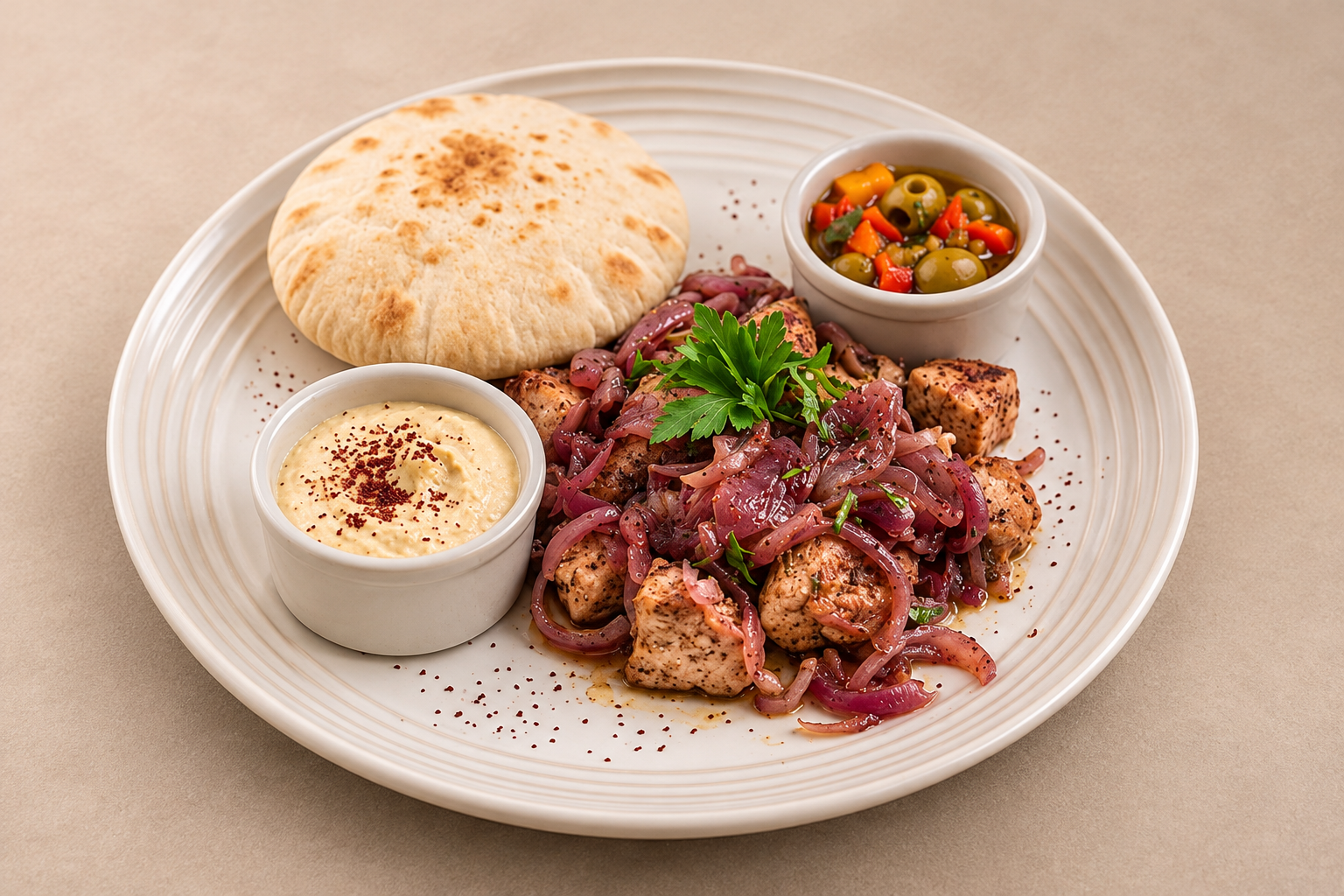
"Musakhan" comes from "sakhkhan", to heat or warm. The name refers to the final assembly: chicken and deeply caramelised onions are layered over olive oil-soaked flatbread and returned to the oven to heat through. The bread absorbs the onion cooking juices from underneath while the chicken sits on top.
It's a Palestinian national dish. The onions are the whole argument, cooked long enough that the natural sugars develop and the tartness of the sumac layered over the top hits a balance you can't shortcut. Delicut's version serves it with hummus and olive bell pepper sauce.
Olive oil is the base fat here. Research compiled in BMC Medicine, 12:78. associated regular olive oil consumption with improved cardiovascular markers, particularly in populations using it as a primary cooking fat. That's the context. The reason it's in musakhan is that the dish doesn't work without it.
Lamb Shank Mansaf
"Mansaf" translates roughly to "large tray." The name comes from how the dish was historically served, communally, on a giant platter, at weddings and funerals and celebrations. It's Jordan's national dish. Arguably the most significant dish in its food culture.
Traditional mansaf uses jameed, fermented dried yoghurt from goat or sheep's milk, as the sauce base. The flavour is unlike fresh yoghurt entirely: tangy, deep, slightly funky in the way that fermented dairy gets. Delicut's version uses cucumber yoghurt in place of jameed and serves slow-cooked lamb shank over aromatic rice with marrow.
Lamb shank is one of the higher-fat cuts on the menu. The long slow cook breaks down the connective tissue into the sauce, which creates the texture that defines the dish. That richness is structural, not incidental.
Persian One-Pot Mixed Grill
Persian cuisine runs adjacent to Arabic cuisine, in the same region, overlapping ingredients like saffron and dried lime, but the traditions are distinct. This dish brings them together: chicken, lamb, and beef cooked with saffron rice in a single vessel, served with cucumber yoghurt and tomato sauce.
Three proteins on one plate means the overall macro split lands between what you'd get from a pure chicken dish and a pure red meat dish. The saffron is there for colour and warmth. The one-pot approach is there because cooking everything together means everything tastes like everything else.
Za'atar Arabic Dishes: Three Ways Delicut Uses the Spice Blend
Za'atar is a spice blend: dried thyme, oregano, sumac, sesame seeds, salt. Common across the Levant. The blend appears three separate times on the Delicut Arabic menu, each time used differently, each resulting in a different dish.
Sumac, the berry that gives za'atar its sharpness, has documented antioxidant activity. Research published in PMC confirmed polyphenol and antioxidant activity in za'atar components at culinary-relevant concentrations. That's a note about the ingredient. It's been a daily staple across the Levant for centuries, and there are reasons beyond flavour.
Levantine Zaatar Chicken and Couscous
Za'atar as the marinade on the chicken. Couscous, North African semolina grain, not rice, as the base. The herb crust is the primary flavour here; the couscous underneath is neutral enough to let it be. Clean, bright, relatively light.
Zaatar Rice with Creamy Spinach Chicken
Same blend, completely different role. Here za'atar goes into the rice, not onto the chicken. The chicken goes into a creamy spinach sauce, rich, earthy. The za'atar in the rice underneath acts as a counterweight to cut through that richness.
Two separate flavour logics running against each other on the same plate. More interesting than either element on its own.
Zaatar Chicken Escalope and Potato Wedges
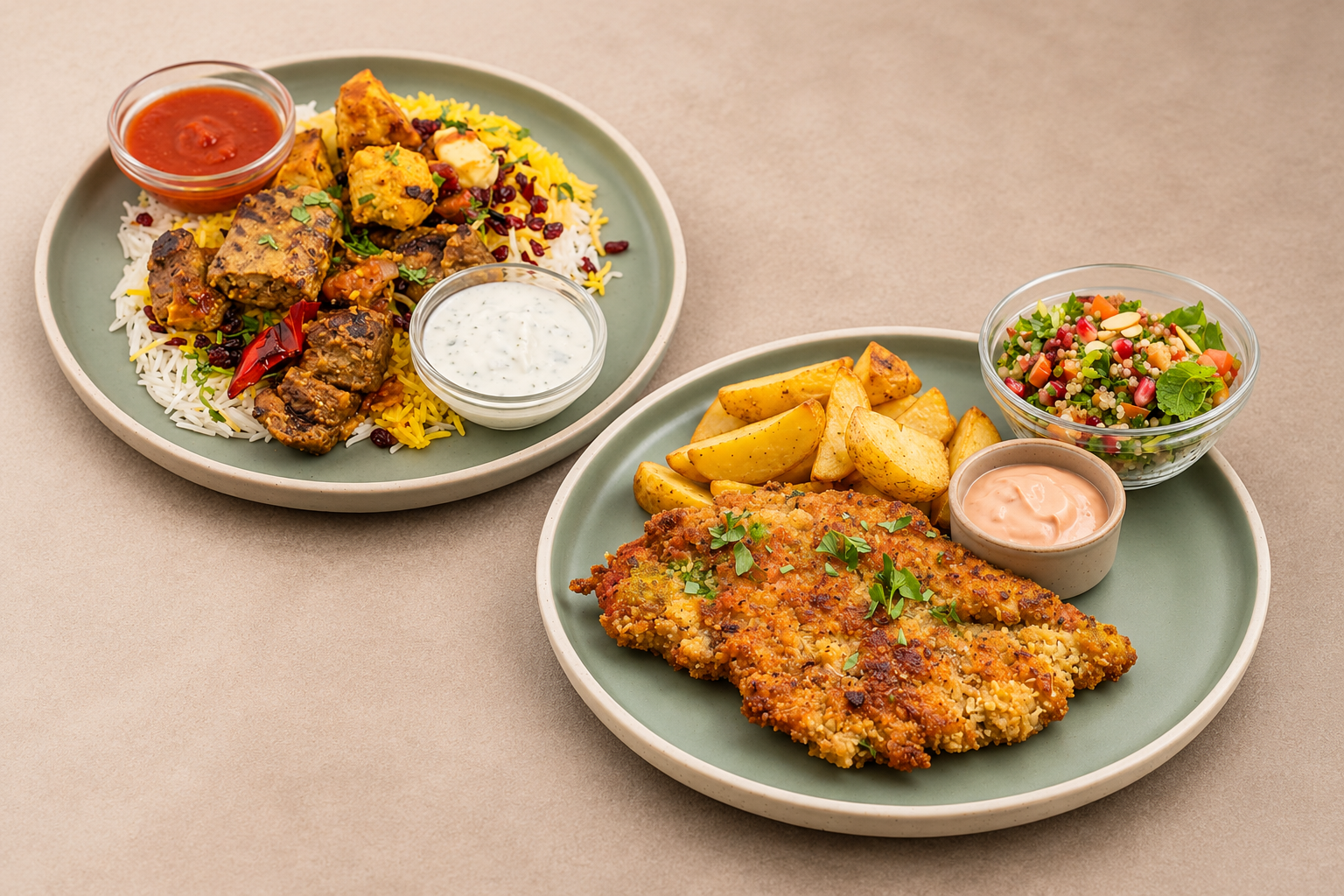
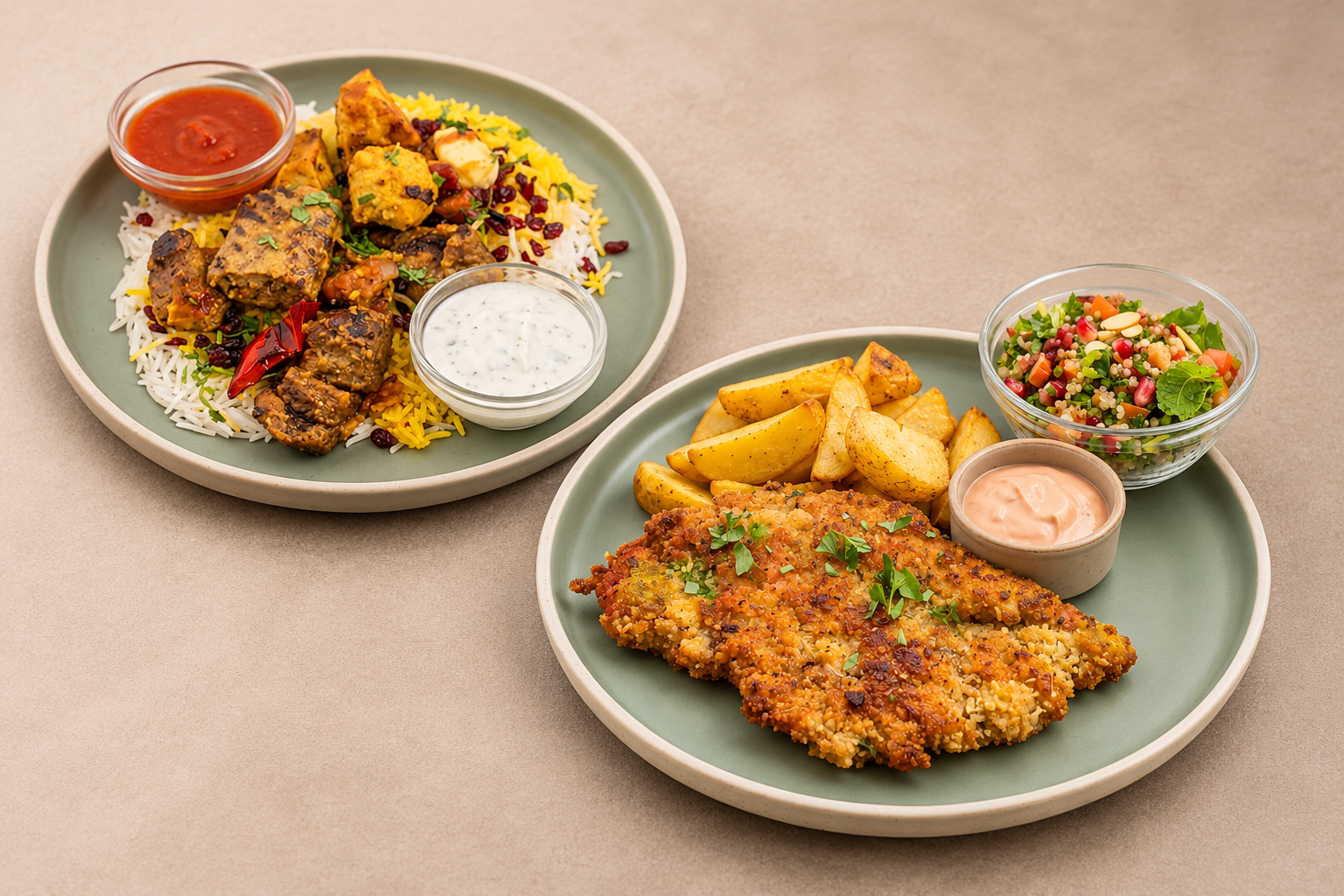
"Escalope" is a European technique, meat pounded flat, coated, and cooked, that Lebanese restaurant culture absorbed and made its own. Za'atar goes into the crumb coating, which means herb flavour and texture arrive at the same time. Different from a za'atar marinade or za'atar in the rice. Served with quinoa tabbouleh salad.
The quinoa in the tabbouleh is a lighter adaptation of the traditional version, which uses bulgur or fine semolina. The grain changes; the core salad, parsley, tomato, lemon and olive oil stays.
Other Arabic Dishes on the Menu Worth Knowing
Turkish Chicken Doner
"Doner" is Turkish for "rotating", the vertical spit on which the meat traditionally cooks. Layers crisp on the outside as they turn; shavings come off as ordered. Delicut serves tender chicken with pita, tahini sauce, and pickled vegetables.
The pickles aren't decoration. Fermentation adds acidity that cuts through the richness of the meat and sauce, and fermented foods bring their own functional value beyond what pickled-for-flavour vegetables do. The sourness is the point.
Bulgur Pilaf
Bulgur is cracked whole-wheat grain, not rice. That distinction matters for texture, flavour, and how the carbohydrates digest. More fibre than white rice, a lower glycaemic index, a nuttier base. It holds its texture longer than rice, which makes it a better option if you're meal prepping across a few days.
Delicut pairs it with chicken or salmon, seasoned with spices, chickpeas, cucumber yoghurt, and a side salad. The chickpeas add a second fibre and plant protein source alongside whichever protein you choose. It fits LCHP positioning cleanly: the grain base is smaller and higher-fibre, the protein portion is larger.
Classic Falafel Wrap
"Falafel" is ground chickpeas or fava beans, mixed with herbs and spices, formed into balls and fried. The Arabic root relates to pepper. It's the only fully vegetarian protein option on the Arabic menu.
Delicut serves it in a protein tortilla with vegetables, tahini sauce, and lentil soup. The lentil soup alongside adds a second legume protein source, which makes the overall plant protein count higher than the falafel alone would deliver. If you want to understand how Arabic cooking approaches vegetarian protein, this is the plate to start with.
Creamy Tahini Chicken Fettuccine
Tahini is sesame paste, a core ingredient that goes into hummus, baba ganoush, dressings, and marinades. Using it as a pasta sauce is a modern adaptation, but the logic is sound: tahini already coats and binds the way a cream sauce does, with a nuttier, slightly bitter edge that cream doesn't have.
Fettuccine isn't a traditional Arabic grain. The fusion is deliberate. Delicut serves it with parmesan and olives, pulling the dish further into Mediterranean-fusion territory, but the sauce base is Levantine through and through.
A study published in the Journal of Nutrition found sesame consumption associated with improved antioxidant status and lipid profiles at culinary consumption levels. The tahini is doing more than binding the pasta.
Balanced Plan vs LCHP: Which Arabic Dishes Fit Which Goal
Every Arabic dish on the Delicut menu is available on both the Balanced plan and the LCHP (Low Carb High Protein) plan. The dish doesn't change. The portions do.
On the Balanced plan: carbohydrates at 40–50% of the meal's calories, protein at 20–25%, fat at 25–30%. Rice-heavy dishes, Mandi, Machboos, Maqluba, Bukhari Rice, sit comfortably in that split without adjustment.
On the LCHP plan: carbohydrates drop to 20–30%, protein rises to 35–45%, fat to 30–45%. Dishes where the protein-to-grain ratio is naturally higher, Bulgur Pilaf, Prawns Mashawi, Salmon Harra, Zaatar Chicken Escalope, are a natural fit. For the rice-heavier dishes, the rice portion is reduced and the protein portion is increased.
The full coming-soon list includes Stuffed Eggplant, Chicken Tajine, Authentic Middle Eastern Chicken Shawarma, Kibbeh Labaniah, and Iraqi Dolma, adding North African and Iraqi regional dishes to a menu that's already covering Gulf, Levantine, Persian, and Yemeni traditions.
How Delicut Prepares Traditional Arabic Meals
Every dish above is chef-prepared and portioned against Delicut's nutritional specifications. That means oil quantities, protein portions, and rice volumes are calibrated to your plan's targets not restaurant-style, where portion size is an afterthought.
The Arabic menu covers Gulf, Levantine, Persian, and Yemeni cooking traditions across 20 launched dishes. More are coming. Delivered fresh across the UAE.
Full menu and meal plan options at Delicut
Key Takeaways
-
Arabic dish names carry real information. Mandi is the moisture from pit-cooking. Maqluba is upside down, describing the flip. Sayadieh is fisherman's, telling you where the dish came from. The name is usually the fastest route to understanding the dish.
- The Arabic menu spans four distinct regional traditions: Gulf (Mandi, Machboos, Bukhari), Levantine (Maqluba, Musakhan, Kafta, za'atar dishes), Persian (Persian Rice, Mixed Grill), and pan-Arabic (Falafel, Bulgur Pilaf, Mashawi). These aren't variations on the same cuisine. They came from different places and tasted different.
- For protein goals: the Bulgur Pilaf, Prawns Mashawi, and Zaatar Chicken Escalope sit most naturally on the LCHP plan. The rice-based Gulf dishes, Machboos, Mandi, Bukhari, are better suited to the Balanced plan at standard portions, or to LCHP with adjusted rice portions.
Frequently Asked Questions
Is all the Arabic food at Delicut halal?
Yes. All Delicut meals are prepared to halal standards. The Arabic menu includes chicken, lamb, beef, fish, and seafood, all sourced and prepared halal. No pork products appear anywhere on the menu.
All 20 Arabic dishes above are available now across Delicut's meal plans, fresh, chef-prepared, portioned to your goals. Free delivery across the UAE. Explore plans at delicut.ae.
Saja Davood
Nutritionist, Delicut
As a Registered Nutritionist with a degree in Food Nutrition and Dietetics, Saja brings over five years of hands-on experience. She designs personalised, science-backed nutrition plans to help manage conditions such as diabetes, hypertension, obesity, PCOS, and digestive disorders. Her approach centres on Medical Nutrition Therapy (MNT), using food and lifestyle adjustments to prevent and manage chronic diseases in a practical, sustainable way.
Related Blogs
Arabic Chicken Dishes: 5 Cooking Traditions
Arabian Dishes Names: A Guide to Delicut's Arabic Food Menu
Popular Arabic Rice Dishes: From Kabsa to Majboos
Breast Cancer Awareness Month
The No Refined Sugar Meal Plan
Delicut Introduces New Arabic Dishes to Its Menu
1,000 Calories vs 1,500 Calories: What's the right range for your body?
Metabolism Slowdown: The Signs Your Body Shows Before the Scale Does
The Relocation Weight Trap
Meal Plan Results First 30 Days
Related Blogs
Arabic Chicken Dishes: 5 Cooking Traditions
Arabian Dishes Names: A Guide to Delicut's Arabic Food Menu
Popular Arabic Rice Dishes: From Kabsa to Majboos
Breast Cancer Awareness Month
The No Refined Sugar Meal Plan
Delicut Introduces New Arabic Dishes to Its Menu
1,000 Calories vs 1,500 Calories: What's the right range for your body?
Metabolism Slowdown: The Signs Your Body Shows Before the Scale Does
The Relocation Weight Trap
Meal Plan Results First 30 Days