1700 Calorie Meal Plan for Fat Loss

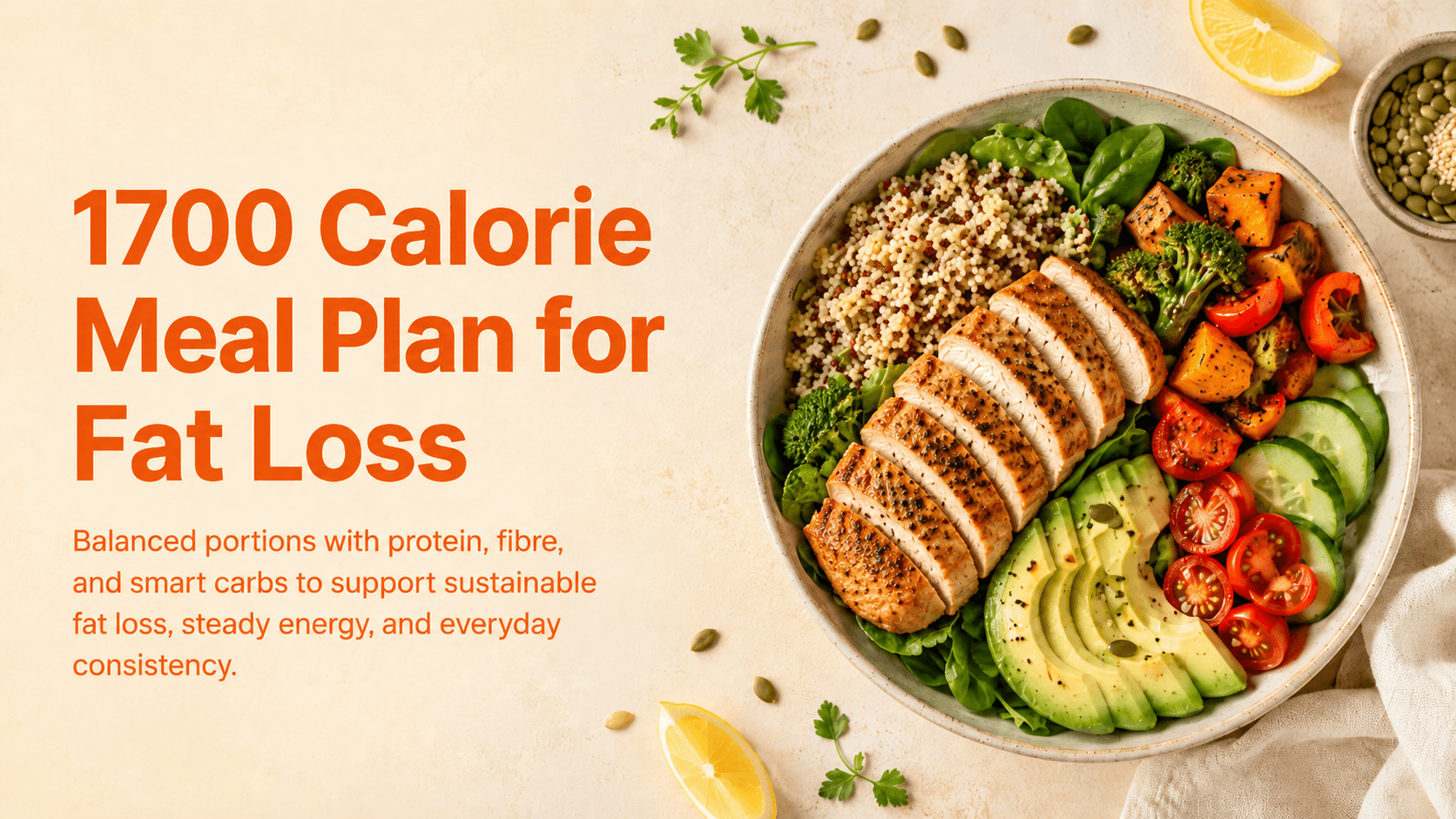
Most people hitting 1700 calories are eating the right amount at the wrong time. This article explains why insulin sensitivity changes through the day, what that means for fat vs muscle loss on a deficit, and how restructuring a 1700 calorie meal plan around the front half of the day changes what the body actually burns.
Most working days follow the same arc. Coffee in the morning because there's no time for anything else. Something light at lunch if it even happens. Then dinner at 8 or 9pm, whatever's fastest, and the snacking that fills the space between dinner and sleep.
By the time the day is tallied, the bulk of those 1700 calories landed in the last four hours before bed. And that's exactly when the body handles them worst.
The Body at 9pm Is Not the Same as the Body at 9am
Insulin sensitivity follows a daily rhythm. It's highest in the morning, reasonable at midday, and drops through the afternoon into the evening. Research on circadian biology and glucose tolerance shows the difference in blood sugar response to an identical meal eaten in the morning versus the evening is substantial enough to change body composition outcomes over weeks.
When insulin sensitivity is high, a meal produces a flatter glucose response, more energy gets directed toward fuel and recovery, and the fat-burning signal stays cleaner. When it's lower, the same portion produces a sharper spike and more of the surplus tips toward storage. Same food. Same calorie count. Different metabolic moment.
A 1700 calorie meal plan that puts 400 calories at breakfast and 900 at dinner hits the number. But the body that 9pm dinner lands in is processing those calories in a very different hormonal environment from the one that would have handled them at noon. The total looks right. The timing is working against the goal.
When You Eat the Protein Is What Determines Whether the Deficit Burns Fat or Muscle
In a calorie deficit, the body needs energy it isn't getting from food. It can pull from fat or from muscle tissue. Which one it favours depends significantly on whether protein is available at each meal, not just across the day in aggregate.
Muscle protein synthesis responds to individual meal thresholds, not daily totals. A meal needs roughly 30 to 40 grams of protein to trigger a meaningful anabolic response. Miss that at breakfast and the first half of the day, the actual fat-burning window, runs without the signal to protect lean mass. Research on meal timing and body composition outcomes shows that the same calorie intake distributed earlier in the day produces measurably better fat loss results than the same total consumed later.
Most people eating at 1700 calories get their largest protein hit at dinner. The morning runs on coffee and something light. The afternoon on whatever fits. By the time dinner arrives with the chicken or fish, the day's muscle-protection window has already passed. The deficit still pulled, just not specifically from fat the way it would have with front-loaded protein. That's how the scale moves but the body doesn't visibly change.
What Front-Loading 1700 Calories Actually Looks Like
The total doesn't change. The day does.
Breakfast is a real meal, protein-first with enough complex carbs to fuel what's ahead. Lunch is the main event, the largest eating occasion of the day, timed when insulin sensitivity is still good and the body can direct calories toward output rather than storage. An afternoon snack bridges without letting hunger compound into dinner. Dinner is complete and satisfying, not minimal, just not carrying the bulk of what the day needed. Structuring meals around activity and the day's actual energy demands is what makes 1700 calories work rather than just maintain.
The hunger pattern through the day changes too. Blood sugar staying more stable through the morning and afternoon means the late-evening appetite that usually runs past the plan is smaller. Not because anything was restricted. Because the day's food actually arrived when it was supposed to.
Same 1700 calorie meal plan. Different distribution. Different body at the end of it.
The number is right. The structure is what needs to change.
Delicut's Performance Plan builds your 1700 calorie meal plan around meal timing and protein distribution, not just hitting a daily target. Front-loaded protein, calories structured around the day's actual energy demands, and a dinner that completes the day rather than carries it. See the Performance Plan here.
Key Takeaways
Insulin sensitivity peaks in the morning and drops through the day. The same 1700 calories eaten earlier produce a different fat-to-storage outcome than the same total consumed at night. The number is one variable. Timing is another.
Protein at breakfast and lunch is what protects muscle during the deficit. Saving the day's protein for dinner means the fat-burning hours run without adequate muscle protection, which tips what gets burned in the wrong direction.
Front-loading doesn't mean eating more. It means restructuring the same 1700 calorie diet so the bulk of the day's food lands when the body can use it most effectively. Hunger through the evening drops as a side effect.
FAQs
Q: Does meal timing actually matter if my daily total stays at 1700 calories?
For scale weight, total calories is the primary driver. For body composition, what proportion of the weight you lose comes from fat versus lean mass, timing matters. Front-loading protein and calories means more of the deficit pulls from fat and less from muscle. The scale might move similarly either way. What the body looks and feels like at the end is different.
Q: I'm genuinely not hungry in the morning. How do I eat breakfast?
Low morning appetite is usually a product of eating heavily late at night. Ghrelin, the hunger hormone, adjusts its rhythm around actual eating patterns over 7 to 10 days. Most people find morning appetite rebuilds fairly quickly once consistent early eating is established. The first week or two feels like eating without hunger. After that it normalises.
Q: Does dinner have to be small for this approach to work?
No. Dinner should be a complete, satisfying meal. The goal isn't to make dinner minimal, it's to shift the proportion so breakfast and lunch are carrying more of the day's calories and protein. A proper dinner that isn't the majority of the day's total fits the pattern without feeling like restriction.
Saja Davood
Nutritionist, Delicut
As a Registered Nutritionist with a degree in Food Nutrition and Dietetics, Saja brings over five years of hands-on experience. She designs personalised, science-backed nutrition plans to help manage conditions such as diabetes, hypertension, obesity, PCOS, and digestive disorders. Her approach centres on Medical Nutrition Therapy (MNT), using food and lifestyle adjustments to prevent and manage chronic diseases in a practical, sustainable way.

Related Blogs
1700 Calorie Meal Plan for Fat Loss
May 13, 2026 | 8
Pescatarian Diet Plan for Balanced Eating
May 11, 2026 | 8
800 Calorie Meal Plan: Risks and Realities You Need to Know
May 8, 2026 | 8
1600 Calorie Meal Plan for Steady Weight Loss
May 7, 2026 | 8
1800 Calorie Meal Plan for Fat Loss: Why the Number Isn't the Whole Story
May 5, 2026 |
Diet Plan to Lose Belly Fat Naturally: What Clean Eating Gets Wrong
May 4, 2026 | 8
7-Day Gestational Diabetes Meal Plan: The Structure That Actually Stabilises Blood Sugar
May 11, 2026 | 8
Late Night Cravings in Dubai
Apr 30, 2026 | 8
Meal Prep Myth: Why Most People Can't Stick to It
Apr 28, 2026 | 8
Detox Diet Plan: Do You Really Need One?
Apr 27, 2026 |