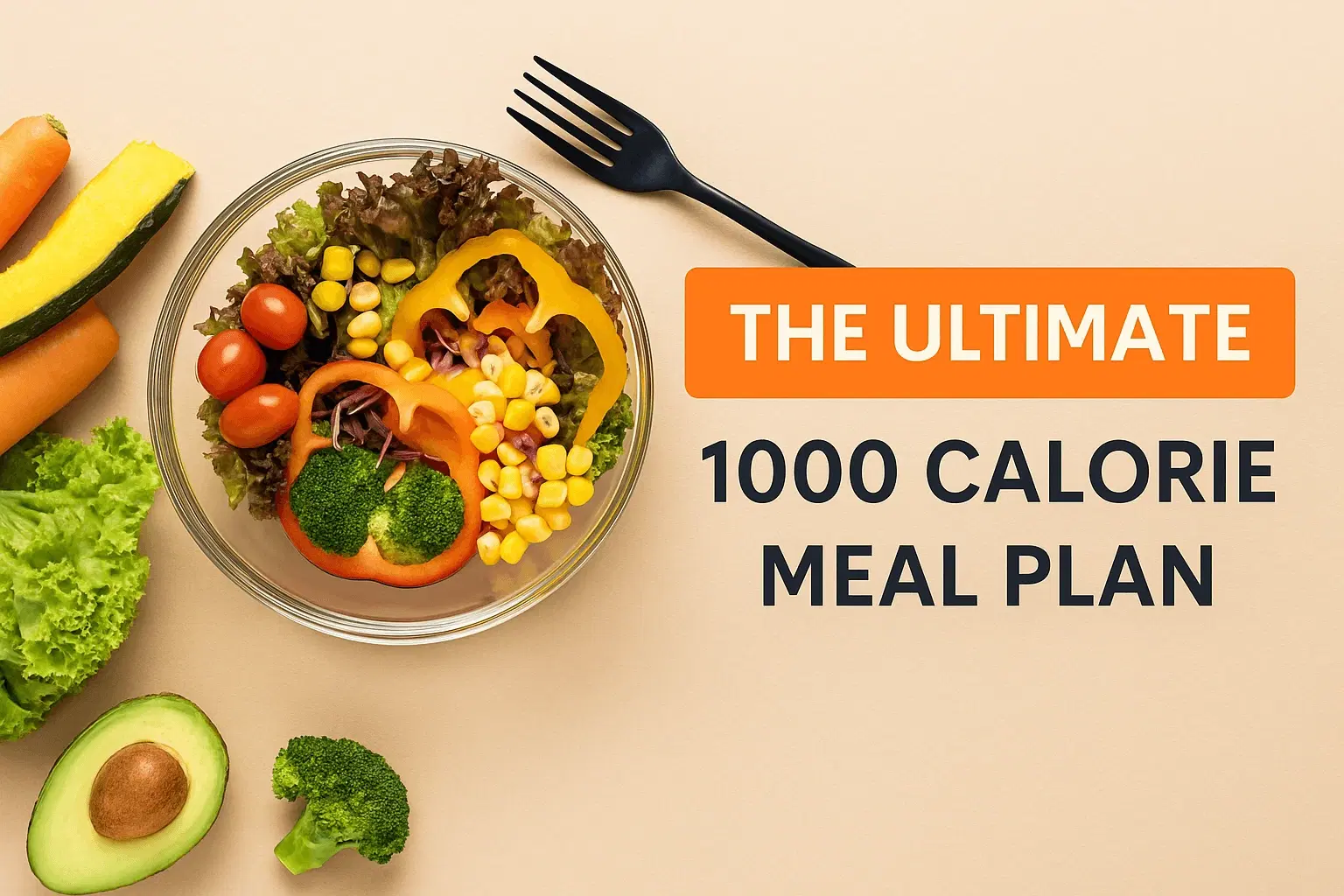
1000 Calorie Meal Plan

Here’s the truth: people don’t start looking up “1000 calorie meal plan” because life is going smoothly.
It usually comes after a moment that hits a little too hard:
- Clothes that suddenly don’t fit
- A wellness check that wasn’t so “well”
- Feeling disconnected from your body
- Or wanting a hard change after weeks of emotional eating
And in the UAE, where portion sizes are more than fulfilling, takeout is always readily available, and social plans revolve around food, it’s completely understandable to crave structure.
A 1000-calorie plan sounds like that shortcut to getting back on track. And here’s the important part:
According to the NHS, very low calorie diets (VLCDs) are typically recommended only for people with obesity but only when supervised by medical professionals.
When calories drop this low, your body needs proper guidance to stay safe, nourished, and energized.
This guide is here to help you understand how to follow a low-calorie plan in a smart, balanced way, no nutrient crashes, no extreme fatigue, no risky shortcuts. Everything you’ll read is grounded in expert recommendations and credible research, so you approach it informed, not overwhelmed.
What is this 1000 calorie diet and how does it work?
A 1000-calorie diet is exactly what it sounds like, you limit your daily intake to roughly 1000 calories. An article published in NIH on optimal weight strategies states, it’s a very low-calorie strategy, meant only for short-term use and ideally done with professional supervision.
Why?
Because 1000 calories is significantly lower than what most adults need.
The average person usually requires 1600–2000 calories per day, depending on age, activity, and metabolism. Dropping to 1000 creates a sharp calorie deficit, which can lead to rapid weight loss, especially in people with obesity.
What does this diet mean for someone with severe obesity?
If you or someone you know is dealing with severe obesity, here’s how this diet can help in the short term.
You eat less calories than your body actually burns.
This pushes your body to use stored fat for energy. But with such a small calorie budget, every calorie needs to be nutrient-dense, no empty calories.
Protein becomes the anchor.
As one of the official websites of the U.S government, NIH highlights, on such a low-calorie plan, protein isn’t optional, it’s the backbone of the diet.
- Aim for 1.0–1.5 g per kg of ideal body weight
- Roughly 35–44% of your total calories
Protein protects your muscles, manages hunger, and keeps your energy stable.
Carbs and fats stay, keep it quality-first.
Low-cal doesn’t mean low-nutrition, so carbs and fats need to be clean, slow-digesting, and purposeful.
- Carbs + fats combined: Should stay around <800 kcal/day
- Fats: Around 15–30 g/day (about 23–27% of total calories)
- Carbs: Mostly complex carbs, oats, quinoa, lentils, whole grains, to give you steady energy
Healthy fats like nuts, seeds, avocado, and olive oil help keep hormones balanced and meals satisfying.
Fiber: Aim for ~10–14 g/day
Fiber controls hunger and aids digestion. Low-cal veggies like zucchini, cucumbers, leafy greens, and broccoli help you stay full without blowing up your calories.
Micronutrients: Hit 100% of your daily vitamin + mineral needs
This is where most people struggle.A 1000-calorie plan can easily fall short on iron, B vitamins, calcium, magnesium, and electrolytes.
Whole foods should fill the gaps, but if not, a doctor may recommend a multivitamin.
Portions look smaller, but meals stay balanced.
You’re not starving yourself, you’re choosing foods with the highest nutrition per calorie, lean proteins, vegetables, whole grains, fruits, and healthy fats.
It’s a short-term solution, not a lifestyle.
VLCD is usually followed to break plateaus or help people with severe obesity begin their weight-loss journey safely. It’s not meant to replace a long-term, sustainable eating pattern.
Why it’s not a DIY plan
At such a low calorie level, it’s easy to under-eat essential nutrients, slow down your metabolism, or feel exhausted. That’s why doctors use this diet in controlled settings, making sure you stay safe while seeing progress.
Who it’s not for:
- Active individuals
- Pregnant or breastfeeding women
- Athletes
- Anyone with medical conditions unless suggested by the doctor
If you're sedentary or medically advised, a short-term 1000-cal diet can help you create a meaningful calorie deficit, but the quality of your food becomes everything.
7 Day 1000 calorie meal plan you can stick to
Built around whole foods you can actually find easily in the UAE.
Day 1
- Breakfast: Scrambled egg whites + spinach + 1 slice whole grain toast (200 cal)
- Lunch: Grilled chicken breast + mixed salad + vinaigrette (300 cal)
- Snack: Unsweetened Greek yogurt + berries (150 cal)
- Dinner: Baked salmon + steamed broccoli + lemon (350 cal)
Days 2–7 follow the same base structure, but it’s always better to swap ingredients around so you don’t get bored or miss any of the main nutrients.
But if you’re someone who actually enjoys a proper 7-day plan and wants to lose weight and build muscle without going this extreme. Check out our 2000-calorie meal plan guide that’s designed with strength, taste, variety, and long-term health in mind.
7-Day meal composition framework
Your plate every day
- Breakfast (200–250 cal):
Egg whites, cottage cheese, oats, or fruit - Lunch (300 cal):
Lean protein + veggies + light dressing - Snack (150 cal):
Greek yogurt, fruit, or nuts (strictly portioned) - Dinner (300–350 cal):
Fish/chicken/lentils + greens + herbs
This structure helps you get more variety without messing your calories.
UAE Edition: Low-calorie meal ideas that still hit the spot
Instead of repeating the same meals for 7 days, follow this structure:
Breakfast (200–250 cal)
Egg whites, cottage cheese, oats, or fruit
Lunch (300 cal)
Lean protein + veggies + light dressing
Snack (150 cal)
Greek yogurt, fruit, or a portioned handful of nuts
Dinner (300–350 cal)
Fish, chicken, or lentils + greens + herbs
This keeps calories consistent and your meals interesting.
1000-calorie diet: Benefits, drawbacks & what to expect
Pros
- Quick short-term weight loss
- Takes away decision fatigue
- Useful reset after overeating
Cons
One article from Medical News Today suggests higher risks such as:
- Risk of nutrient deficiencies
- Possible fatigue + slower metabolism
- Not sustainable long term
- Not suitable for active individuals
Expert tips to survive on a 1000 calories diet
- Load up on lean protein to stay full
- Use spices, herbs, lemon → adds flavor, not calories
- Stay hydrated
- Avoid low-cal junk like processed biscuits
- Get nutritionist guidance before starting
Heads up- It’s advisable to maintain proper hydration and follow exercise guidances as your doctor or nutritionists suggests. One key thing to always remember is, this diet isn’t safe for children or teenagers.
Final take: Safe, balanced, and built to last
A 1000-calorie meal plan can jumpstart weight loss, but it’s not something to live on, and definitely not something to do without proper guidance. It is a short-term diet and not a long-term lifestyle.
At Delicut, we don’t recommend extremely low-calorie diets. We believe in a more sustainable, calorie-balanced, and nutritionally calculated approach to weight loss, one that fuels your body, supports your routine, and actually fits into real life.
If someone still chooses to follow a 1000-calorie plan, it’s important to consult a doctor or certified nutritionist first to ensure it’s safe for their health and goals.
For everyone else who wants results without the risks, Delicut offers:
- Calorie-controlled meal plans
- Macro-balanced meals
- Nutritionist-designed menus
- Flexible options tailored to UAE lifestyles
Explore our 5-day and monthly plans to find a healthier, more sustainable way to reach your goals, without the stress, the calorie math, or the guesswork.
Maurice Maffeo
Culinary Director, Delicut
Chef Maurice Maffeo has over 30 years of experience in the culinary world. He has been executive chef to top names in the Middle East like Carlucios and Cafe Bateel and Strada Group of Restaurants in the UK.

Related Blogs
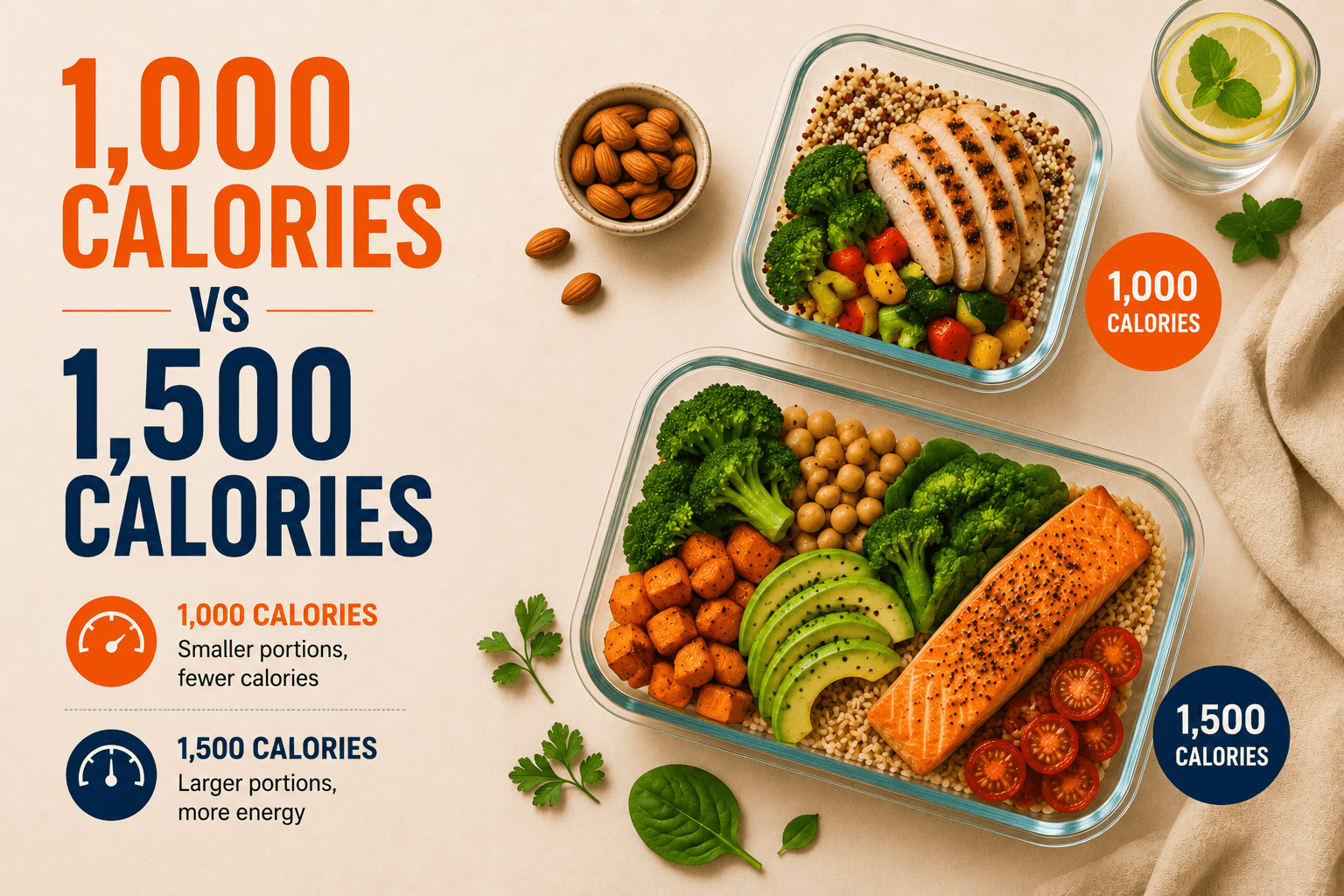
1,000 Calories vs 1,500 Calories: What's the right range for your body?
May 27, 2026 | 8
Metabolism Slowdown: The Signs Your Body Shows Before the Scale Does
May 19, 2026 | 8
The Relocation Weight Trap
May 26, 2026 | 8
Meal Plan Results First 30 Days
May 25, 2026 | 8
Weight Loss in the UAE
May 25, 2026 | 8
Structured Meal Planning
May 23, 2026 | 8
Meals for Bloating and Acid Reflux
May 21, 2026 | 8
Influencer Diet Culture: Why the Plan That Worked for Them Won't Work for You
May 21, 2026 | 8
Appetite Suppression: Why Coffee, Cigarettes, and Skipped Meals Make You Hungrier
May 18, 2026 |
Flat Stomach Diet Plan for Less Bloat
May 15, 2026 | 8