2500 Calorie Meal Plan for Active Lifestyles: A Practical Daily Guide

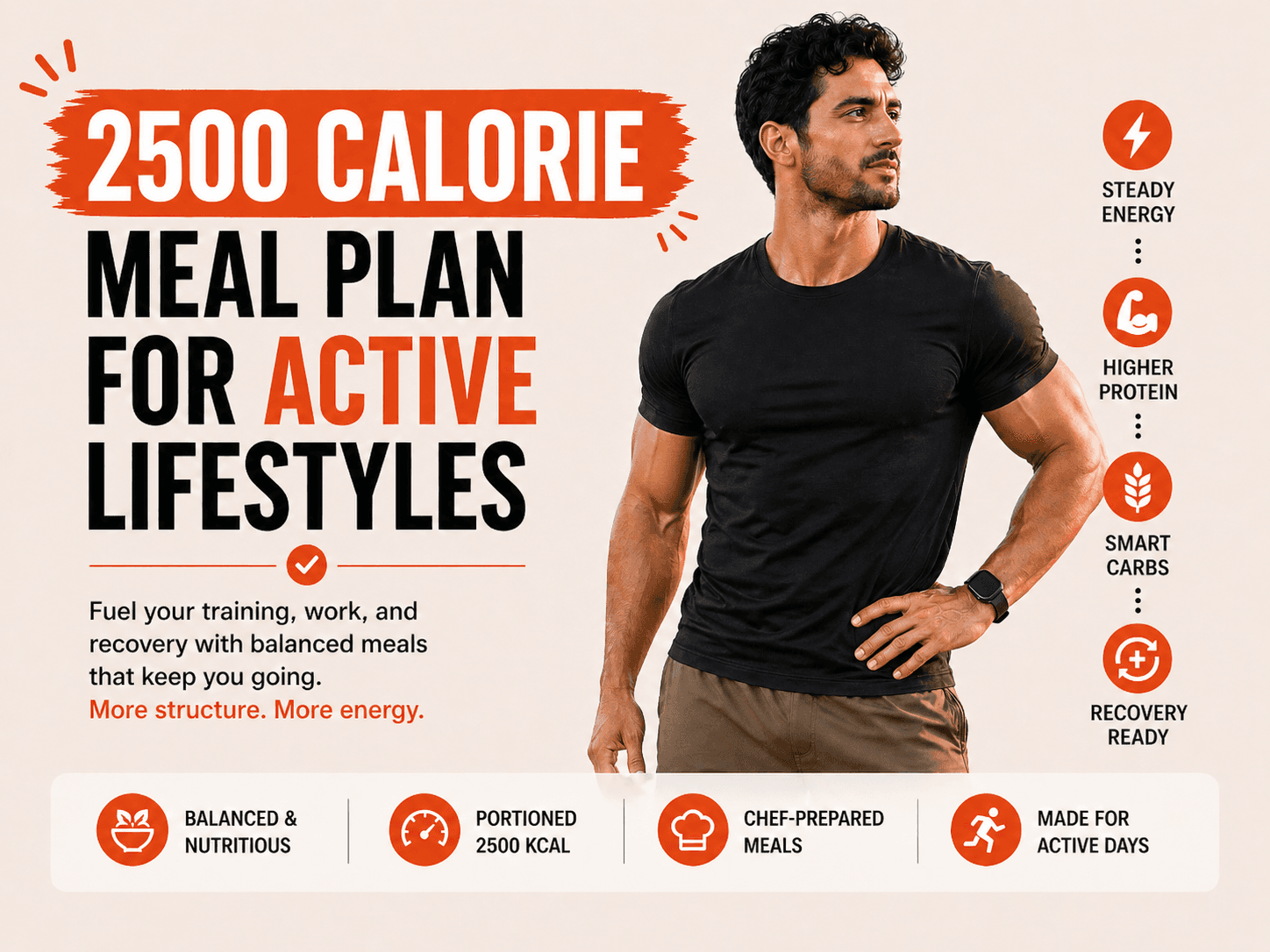
You finish a solid training session, grab something quick between the gym and work, then spend the rest of the day half-full and slightly unsure whether you actually ate enough, or just ate a lot. That gap matters more than most active people realise.
For active adults, eating more is rarely the hard part. Eating enough of the right food, spread well across the day, is where things usually wobble. When meals are random, your energy dips earlier, recovery slows, and hunger gets loud enough to push you towards whatever is easiest. Research from the Mayo Clinic points out that calories are simply one part of the picture, the quality and balance of those calories shape energy, body composition, and overall health [1].
Who needs a 2500 calorie diet
This level of intake tends to suit people who move a lot and expect a lot from their body.
If you train several times a week, walk plenty, or juggle demanding workdays with regular exercise, your body often needs more fuel than a standard low-calorie plan can offer. Active professionals usually feel this first as flat workouts, constant snacking, or the strange mix of being tired and hungry at the same time.
Athletes and strength-focused trainees often land here too. Extra calories help support training volume, glycogen recovery, and muscle repair, especially when sessions are frequent. According to Harvard’s Nutrition Source, active people generally need a steady supply of carbohydrate-rich and protein-rich foods to support performance and recovery, rather than relying on oversized meals once hunger becomes urgent [2].
A useful rule: if your training is consistent but your energy, recovery, or body composition feels inconsistent, your intake may be lagging behind your output.
How to build the right macro balance
A higher-calorie plan works best when each meal has a job to do.
You want enough protein to support repair and help you stay full, enough carbohydrates to keep training quality high, and enough healthy fats to make meals satisfying and support hormone health. In practice, that usually looks like a plate built around a serious protein source, a proper serving of smart carbs, vegetables that add volume and micronutrients, plus fats that round the meal out.
For many active adults, a balanced split lands somewhere around 25 to 30% protein, 40 to 50% carbohydrates, and 20 to 30% fats, though the exact ratio depends on your goal. Someone chasing muscle gain may lean a little higher on carbs. Someone trying to stay lean while maintaining performance may push protein slightly higher.
“The people who hit their nutrition goals most consistently are usually the ones who stopped estimating restaurant portions and started removing the guesswork.”
If you are tracking closely and still finding your numbers drift all over the place, this is usually where a structured option earns its place. Delicut’s Performance Low Carb High Protein plan makes sense for active UAE professionals who want accurate calories, reliable portions, and meals designed by nutritionists, without having to prep everything themselves.
Delicut Tip: Pick two meals in your day that stay consistent from Monday to Friday. Most macro inconsistency comes from the meals you improvise when you are rushed, not the ones you planned.
A daily structure you can actually follow
The easiest way to make this work is to spread intake across three main meals and one or two snacks. That keeps energy steadier and makes the total feel manageable.
A practical day might look like this:
- Breakfast: eggs or Greek yoghurt with oats, fruit, and nut butter
- Lunch: grilled chicken, rice or sweet potato, vegetables, and olive oil-based dressing
- Snack: protein yoghurt, a sandwich, or dates with nuts after training
- Dinner: salmon, lean beef, or tofu with quinoa or potatoes and a generous side of vegetables
- Optional extra snack: cottage cheese, fruit, or a protein smoothie if your training load is high
This is where people often overcomplicate things. You do not need six perfect bodybuilding meals. You need meals that cover your intake without leaving long stretches where hunger catches up and pushes you into random choices.
Common mistakes with higher-calorie eating
One of the biggest mistakes is assuming more calories means anything goes.
Extra intake from refined carbs, sauces, and convenience snacks can push calories up fast without doing much for recovery or fullness. You hit the number, but not the outcome you wanted.
Another common one is underestimating protein. This shows up a lot in active people who eat enough overall but still struggle with recovery, muscle retention, or constant hunger.
Skipping meals causes its own mess. When you leave too much of your intake for later, you end up eating reactively. That usually means less balanced food, rougher digestion, and macros that swing wildly from one day to the next.
And when your schedule is doing what Dubai schedules tend to do, Delicut helps turn that plan into something you can actually stick to.
References
[1] Mayo Clinic: Weight loss, calories and healthy eating
https://www.mayoclinic.org/healthy-lifestyle/weight-loss/in-depth/calories/art-20048065
mayoclinic.org · Supports the point that calorie intake matters, but food quality and balance shape overall health and body composition.
[2] Harvard T.H. Chan School of Public Health: The Nutrition Source, Carbohydrates and protein guidance
https://nutritionsource.hsph.harvard.edu/carbohydrates/
hsph.harvard.edu · Supports the role of carbohydrate intake in fuelling activity and recovery for active adults.
Saja Davood
Nutritionist, Delicut
As a Registered Nutritionist with a degree in Food Nutrition and Dietetics, Saja brings over five years of hands-on experience. She designs personalised, science-backed nutrition plans to help manage conditions such as diabetes, hypertension, obesity, PCOS, and digestive disorders. Her approach centres on Medical Nutrition Therapy (MNT), using food and lifestyle adjustments to prevent and manage chronic diseases in a practical, sustainable way.

Related Blogs

Meal Prep Myth: Why Most People Can't Stick to It
Apr 28, 2026 | 8
Detox Diet Plan: Do You Really Need One?
Apr 27, 2026 |
2500 Calorie Meal Plan for Active Lifestyles: A Practical Daily Guide
Apr 24, 2026 | 8
Meals on the Go for Busy Families in Dubai
Apr 22, 2026 |
Build Your Own Meal Plan
Apr 20, 2026 | 8
Your Carnivore Diet Plan Isn't Broken
Apr 18, 2026 |
3000 Calories Isnt 'Eating a Lot' If You're This Active
Apr 17, 2026 | 8
OMAD Effects on Muscle
Apr 9, 2026 | 8
Why Your IBS Diet Plan Isnt Working
Apr 3, 2026 |
The easiest way to eat healthy in UAE without cooking or overspending
Mar 30, 2026 | 8